Skip to content

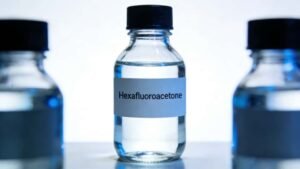
Hexafluoroacetone is a name that appears frequently in advanced fluorochemistry, yet its role is often misunderstood or oversimplified. For buyers, engineers, and R&D teams, the challenge is not recognizing the compound, but understanding why it matters, where it fits in the fluorochemical value chain, and what risks and advantages it brings. Misjudging its properties can lead to improper handling, poor downstream yields, or regulatory complications. The solution is a clear, application-driven understanding of hexafluoroacetone as a highly reactive fluorinated intermediate, not a commodity solvent or additive.
Hexafluoroacetone (HFA) is a highly reactive fluorinated ketone used primarily as an intermediate in the synthesis of fluoropolymers, fluorinated monomers, pharmaceuticals, and specialty fluorochemicals, valued for its strong electron-withdrawing CF₃ groups and unique reactivity.
Chemical identity and fundamental properties
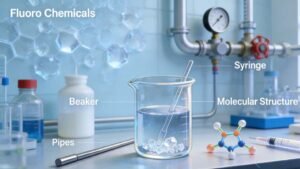
Hexafluoroacetone is a fully fluorinated analog of acetone in which all hydrogen atoms are replaced by fluorine. This substitution dramatically alters its chemical behavior. The strong electron-withdrawing effect of the fluorine atoms makes the carbonyl carbon highly electrophilic, enabling reactions that are not feasible with conventional ketones.
Key chemical characteristics include:
- Extremely strong electron-withdrawing CF₃ groups
- High reactivity toward nucleophiles
- Low boiling point relative to molecular weight
- High volatility and vapor pressure
- Chemical instability under uncontrolled conditions
These properties explain why hexafluoroacetone is rarely isolated for casual use and instead handled under controlled industrial environments.
Basic technical data (typical reference values)
| Parameter | Description |
|---|---|
| Chemical class | Fluorinated ketone |
| Molecular feature | (CF₃)₂C=O |
| Physical state | Volatile liquid or gas (temperature dependent) |
| Reactivity | Very high |
| Typical role | Synthetic intermediate |
Why hexafluoroacetone is so reactive
The defining feature of hexafluoroacetone is the presence of two trifluoromethyl (CF₃) groups attached to a carbonyl carbon. These groups withdraw electron density so strongly that the carbonyl carbon becomes highly susceptible to nucleophilic attack.
This behavior allows hexafluoroacetone to:
- Form fluorinated alcohols and diols
- Generate cyclic fluorinated structures
- Act as a building block for fluoropolymer precursors
- Enable introduction of perfluoroalkyl functionality
From a synthetic chemistry standpoint, hexafluoroacetone is less a “chemical product” and more a reactive platform.
Industrial and commercial applications
Hexafluoroacetone is used almost exclusively in upstream or midstream fluorochemical synthesis. It is rarely sold to end users outside of chemical manufacturing, pharmaceutical R&D, or advanced materials development.
Key application areas
| Application sector | Role of hexafluoroacetone |
|---|---|
| Fluoropolymers | Monomer and crosslinker precursor |
| Specialty fluorochemicals | Functional intermediate |
| Pharmaceuticals | Fluorinated building block |
| Agrochemical research | Structure modification |
| Advanced materials | High-performance fluorinated units |
In fluoropolymer chemistry, hexafluoroacetone derivatives are used to modify polymer architecture, improving thermal stability, chemical resistance, or surface properties.
Safety and handling considerations
Hexafluoroacetone must be treated with respect. Its high reactivity and toxicity mean it is unsuitable for casual laboratory use without appropriate infrastructure.
Critical safety considerations include:
- Strong respiratory and eye irritation
- Toxicity upon inhalation
- High vapor pressure requiring closed systems
- Potential for violent reactions with nucleophiles
As a result, hexafluoroacetone is typically handled in dedicated fluorochemical facilities with proper ventilation, containment, and trained personnel.
Regulatory and compliance perspective
From a regulatory standpoint, hexafluoroacetone is classified as a hazardous chemical intermediate. Its use is generally restricted to licensed industrial and research settings, with strict documentation, transport, and storage requirements.
Importantly, hexafluoroacetone is not a consumer PFAS issue in the usual sense—it is not present in finished consumer goods. However, it may fall under fluorinated substance reporting frameworks depending on jurisdiction and use volume.
Why hexafluoroacetone remains irreplaceable
Despite regulatory pressure on fluorinated chemistry, hexafluoroacetone remains valuable because few alternatives offer the same combination of reactivity and fluorine density. Substitutes often require longer reaction pathways, lower yields, or compromise final material performance.
For high-value fluoropolymers and specialty molecules, hexafluoroacetone enables:
- Shorter synthesis routes
- Precise fluorine incorporation
- Unique molecular architectures
These advantages often outweigh the additional handling complexity.
Practical sourcing considerations
Companies sourcing hexafluoroacetone should focus less on price and more on quality control, impurity management, and supply reliability. Small deviations in purity or moisture content can significantly affect downstream reactions.
Key sourcing criteria include:
- Consistent purity and traceability
- Reliable packaging for volatile chemicals
- Regulatory documentation support
- Technical communication capability
Final summary
Hexafluoroacetone is a highly reactive fluorinated ketone that plays a strategic role in advanced fluorochemical synthesis. It is not a commodity material, nor a consumer-facing product, but a powerful intermediate that enables the production of high-performance fluoropolymers, pharmaceuticals, and specialty chemicals.
Understanding its chemistry, risks, and proper application context is essential for anyone working in fluorine-based materials science or industrial synthesis.
A practical note from industry experience
In real projects, hexafluoroacetone delivers value only when its reactivity is fully respected. Successful users treat it as a precision tool—used deliberately, controlled tightly, and consumed efficiently within well-designed processes.
Talk to Sparrow-Chemical about fluorochemical intermediates
If you are sourcing hexafluoroacetone or related fluorochemical intermediates and require consistent quality, technical clarity, and export-ready supply, Sparrow-Chemical can support your needs. We work with professional customers to ensure fluorochemical intermediates are selected, handled, and delivered correctly. Visit https://sparrow-chemical.com/ to discuss your application with our technical team.