Aluminum fluoride is one of those industrial chemicals that many buyers encounter only when they begin working seriously with aluminum smelting, ceramics, specialty glass, flux systems, or inorganic fluoride chemistry. The problem is that AlF3 is often described too simply—just as “a flux for aluminum production” or “an inorganic fluoride salt.” That shorthand is not enough for engineers, buyers, or plant managers who need to understand what it really is, why it matters, how it behaves, where it is used, what quality parameters matter, and how to source it correctly. If you misunderstand Aluminum Fluoride, you can make poor decisions about bath chemistry, consumption control, impurity management, storage, and total operating cost.
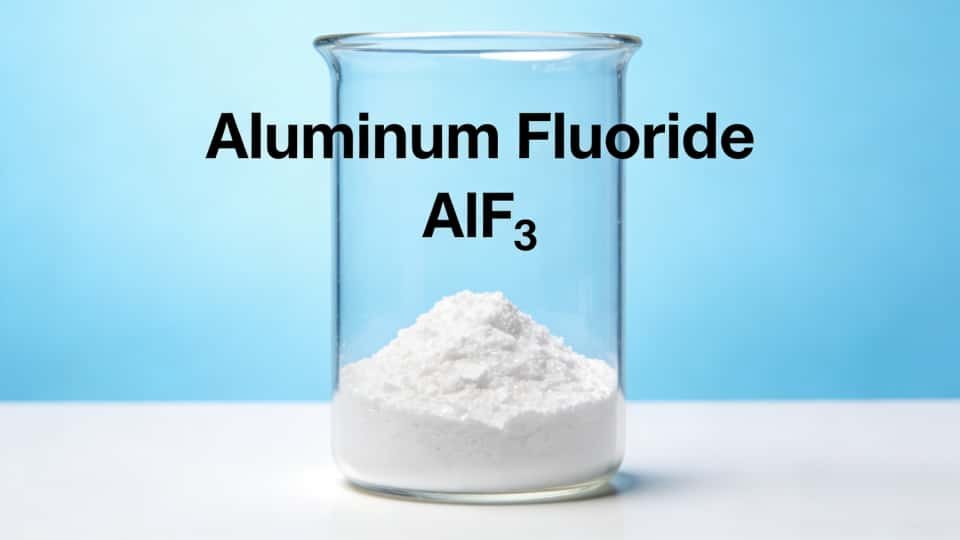
Aluminum fluoride (AlF3) is an inorganic fluoride compound composed of aluminum and fluorine, usually supplied as a white powder or granular solid and used mainly to control the electrolyte chemistry of aluminum smelting baths. Its most important industrial function is to reduce the bath’s melting temperature and adjust the sodium-to-fluoride balance in Hall-Héroult aluminum production, but it is also used in ceramics, glass, abrasives, welding fluxes, and selected chemical applications. Buyers should evaluate AlF3 by purity, bulk density, particle size, moisture, impurity profile, and performance in the final process—not by price alone.
If you want to understand Aluminum Fluoride properly, it helps to look at it from multiple angles at the same time: chemistry, crystal structure, production routes, physical properties, bath behavior, industrial applications, quality control, handling, and purchasing logic. Once those pieces are connected, AlF3 stops being just another fluoride and becomes much easier to evaluate as a real industrial material.
Understanding the Basic Identity of Aluminum Fluoride
Aluminum fluoride is an inorganic chemical compound with the molecular formula AlF3. In simple terms, it is the fluoride of aluminum, formed by the combination of aluminum ions and fluoride ions. In industrial chemistry, however, that simple definition is only the starting point. What gives Aluminum Fluoride its real importance is not just its composition, but the way it behaves under high-temperature process conditions, especially in molten cryolite-based electrolytes used for primary aluminum production.
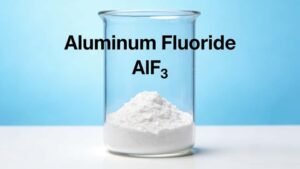
From a chemical classification perspective, AlF3 belongs to the family of metal fluorides. It is commonly described as a white crystalline or powdery solid, though its industrial appearance can vary depending on production route, hydration state, particle engineering, and whether the material is supplied as powder, granules, or dense sand-like particles for smelter feeding systems. It is not a casual laboratory chemical in industrial practice; it is a performance-critical process input. In aluminum smelting, even small variations in effective AlF3 addition can influence bath ratio, current efficiency, energy consumption, crust formation, metal quality, and fluoride losses.
A very important point for non-specialist buyers is that Aluminum Fluoride is often discussed together with cryolite, sodium aluminum fluoride, and the broader family of fluoride bath additives. That can create confusion. Cryolite and AlF3 are related, but they are not the same thing and they do not play exactly the same role. Cryolite provides the main electrolyte medium in the Hall-Héroult process, while AlF3 is typically used as a bath chemistry adjuster to lower the bath ratio and influence operating characteristics. This distinction matters in procurement, dosage, and process troubleshooting.
Another reason Aluminum Fluoride is frequently misunderstood is that the commercial term “Aluminum Fluoride” may refer to products of different process histories. Some grades are produced from aluminum hydroxide and hydrofluoric acid; others come from secondary fluoride streams or fluosilicic acid routes. Some are optimized for smelter-grade use, while others are designed for ceramic, glass, or specialty applications. Two products labeled “AlF3” can therefore behave differently in terms of purity, bulk density, free acidity, moisture, trace impurities, and dust behavior. A buyer who focuses only on nominal assay can miss the more important indicators of usable performance.
At the molecular and structural level, anhydrous AlF3 is best known as a strongly bonded ionic-covalent network solid. This gives it significant thermal stability and a low tendency to behave like a simple meltable salt under ordinary conditions. In process environments, especially those involving fluoride melts, it participates through dissolution and equilibrium effects rather than acting like a generic filler. That is why it has disproportionate industrial importance relative to how simple its formula looks on paper.
In commercial and technical discussions, you may also encounter references to:
- Anhydrous Aluminum Fluoride
- Smelter Grade Aluminum Fluoride
- Dry AlF3
- Aluminum fluoride for electrolytic aluminum
- Aluminum fluoride for ceramics or glass
These names often point to end-use orientation rather than a completely different molecule. For practical buyers, the key is not the label alone but the total specification package and intended application fit.
Chemical Formula, Molecular Weight, and Core Chemical Nature
The chemical formula of Aluminum Fluoride is straightforward: AlF3. It consists of one aluminum atom and three fluorine atoms. The molar mass is approximately 83.98 g/mol, based on atomic weights of aluminum and fluorine. Although the formula is simple, the compound’s chemistry is not trivial because aluminum is a small, highly charged cation and fluorine is extremely electronegative. That combination creates a very strong and stable bonding environment.
In many basic descriptions, AlF3 is introduced as an aluminum salt of hydrofluoric acid. That is chemically serviceable, but industrially incomplete. Aluminum fluoride is better understood as a high-stability inorganic fluoride with strong affinity for fluoride-rich systems. It is not combustible, not an organic fluorochemical, and not part of the PFAS class. This is an important distinction because many people outside inorganic fluoride industries mistakenly group all fluorine-containing chemicals together. Aluminum Fluoride belongs to classical inorganic fluorides, not organofluorine specialty compounds.
Its chemical behavior is closely linked to:
- the small size and high charge density of Al3+
- the strong bond energy associated with Al–F interactions
- its low volatility in normal handling conditions
- its role in fluoride equilibria in molten salt systems
In water, Aluminum Fluoride is only sparingly soluble under neutral conditions, but its behavior is affected by pH and complexation. In strongly acidic fluoride systems, species distribution becomes more complicated. In molten fluoride media, however, AlF3 becomes highly relevant because it affects the overall chemistry and physical properties of the electrolyte. This contrast between modest aqueous behavior and high process importance in molten salts is one reason the compound is often underestimated by non-specialists.
The formula itself also helps explain why Aluminum Fluoride is such an effective modifier in aluminum electrolysis. The addition of AlF3 effectively changes the sodium fluoride to aluminum fluoride balance of the bath. In practical smelter language, operators often discuss bath ratio or cryolite ratio, which is broadly related to the NaF/AlF3 relationship. By adding AlF3, the bath ratio is reduced, which generally lowers bath liquidus temperature and can improve process control when managed correctly. Because this chemistry is central to primary aluminum operations, AlF3 is not just an additive—it is a control lever.
The following table summarizes the most basic identifiers.
| Property | Value / Description |
|---|---|
| Chemical name | Aluminum Fluoride |
| Formula | AlF3 |
| CAS (commonly associated) | 7784-18-1 |
| Molecular weight | ~83.98 g/mol |
| Chemical family | Inorganic fluoride |
| Typical appearance | White powder, granule, or crystalline solid |
| Main industrial role | Electrolyte modifier in aluminum smelting |
| Other uses | Ceramics, glass, abrasives, fluxes, specialty inorganic applications |
For technical communication, it is also useful to distinguish anhydrous AlF3 from hydrated or partially hydrated materials that may appear during production or storage. In most serious industrial applications, especially aluminum smelting, the performance discussion centers on the effectively anhydrous or controlled-moisture material because water content can influence handling and process behavior.
Structure, Physical Properties, and Material Characteristics
To understand what Aluminum Fluoride is in practice, physical properties matter just as much as formula. In industrial buying, many application failures or process inefficiencies do not happen because the formula is wrong; they happen because the delivered material has the wrong density, particle size distribution, moisture level, or impurity profile. That is why a serious explanation of AlF3 must move beyond basic chemistry into material behavior.
Commercial Aluminum Fluoride is usually a white or off-white solid. Depending on production method and final finishing, it may be supplied as fine powder, microgranules, dense granules, or coarse particles adapted for mechanical feeding. Powdery AlF3 may offer faster dissolution or dispersion in some systems, but it also creates more dusting and handling loss. Granular material generally improves feeding stability, reduces airborne particulate issues, and may be preferred in larger smelter operations.
Key physical properties often discussed include:
- Appearance and color
- Chemical purity
- Bulk density
- Particle size distribution
- Moisture
- Loss on drying or ignition
- Fluoride content
- Free acidity or residual reaction byproducts
- Insoluble matter
- Trace metal impurities
Anhydrous Aluminum Fluoride is thermally stable and has a relatively high sublimation/decomposition region rather than behaving as a low-melting commodity salt. This is part of what makes it valuable in harsh process environments. It is not highly soluble in ordinary water, which can be beneficial for some storage and application contexts, but its surface can still interact with moisture over time depending on how it was manufactured and packaged.
For smelter-grade buyers, bulk density is especially important. Two AlF3 products with similar assay may behave very differently in pneumatic transport, silo storage, feeder calibration, crust penetration, and dissolution behavior in the bath. Density influences not only logistics but also actual metering accuracy. A lower-density dusty product may appear cost-competitive per metric ton yet perform worse in plant use because of feeding losses, segregation, dust emissions, or slower effective transfer into the process.
Particle size matters for similar reasons. A material that is too fine may bridge, fluidize unpredictably, or increase dusting. A material that is too coarse may dissolve more slowly or cause uneven feeding. The ideal particle distribution depends on end use. For aluminum electrolysis, the physical profile should match the user’s feeding and bath dynamics, not merely a generic lab standard.
The following table shows a practical physical-property framework buyers often use when evaluating Aluminum Fluoride.
| Parameter | Why It Matters | Typical Buyer Concern |
|---|---|---|
| Purity / assay | Determines active AlF3 content | Real performance vs nominal grade |
| Bulk density | Affects feeding, handling, logistics | Metering accuracy and dust control |
| Particle size | Controls flowability and dissolution | Stable dosing and bath response |
| Moisture | Influences caking and process behavior | Storage stability and feeding reliability |
| Color / appearance | Quick visual QC indicator | Contamination or process inconsistency |
| Insolubles | May affect downstream systems | Bath contamination or residue problems |
| Sulfate / silica / iron | Important impurities | Efficiency, contamination, or product quality |
| Free acid | Can affect equipment and handling | Safety and material compatibility |
A less discussed but highly practical property is flowability under actual plant conditions. Some AlF3 products look acceptable in lab reports but perform poorly in bins, screw feeders, or pneumatic systems because the supplier optimized chemistry but not physical form. For industrial buyers, the best Aluminum Fluoride is not always the chemically “highest” assay on paper; it is the grade that gives the most stable and cost-effective behavior in the actual process.
How Aluminum Fluoride Is Produced
Understanding how Aluminum Fluoride is made helps buyers evaluate cost, impurity risks, and suitability for different applications. Industrial AlF3 is not produced through a single universal route. The main production paths can differ significantly in feedstock source, byproduct profile, energy demand, and environmental management requirements.
One of the most common routes involves reacting aluminum hydroxide or another aluminum source with hydrofluoric acid (HF). In simplified form, the reaction may be represented as:
Al(OH)3 + 3HF → AlF3 + 3H2O
This route is conceptually simple and can yield high-purity material if raw materials and process control are good. However, “simple” does not mean easy. HF handling requires specialized corrosion-resistant equipment, strict safety control, fluoride emission management, and careful drying technology. The quality of the final AlF3 depends not only on stoichiometry but also on filtration, washing, drying, calcination, and granulation steps.
Another important route uses fluosilicic acid or related fluoride-containing secondary streams. These routes can be attractive from a resource-efficiency standpoint because they may valorize byproduct fluoride sources from phosphate fertilizer or other chemical industries. However, impurity management becomes even more critical. Silicon, sulfate, alkali metals, and other trace species may affect the final product if purification is not rigorous. For some applications, that may be acceptable; for others, especially demanding smelter operations, impurity control is decisive.
In practice, production usually includes some combination of the following operations:
- Raw material preparation
- Controlled reaction
- Solid-liquid separation
- Washing or purification
- Drying / dehydration
- Calcination
- Milling or granulation
- Packaging
The production route influences not only purity but also physical morphology. That is why two suppliers may both sell “Aluminum Fluoride 98% min,” yet one offers a more free-flowing dense granular product and the other supplies a dusty, softer powder. The underlying process history creates these differences.
A simplified production comparison is shown below.
| Production Route | Main Feedstocks | Main Advantages | Main Challenges |
|---|---|---|---|
| HF + aluminum hydroxide | HF, Al(OH)3 | High-purity potential, established route | HF safety, drying cost, corrosion control |
| HF + alumina/aluminum source | HF, Al-bearing raw material | Flexible raw material strategy | Reaction control, impurity variability |
| Fluosilicic acid-based route | H2SiF6, Al source | Potential cost/resource advantage | Higher impurity risk, purification burden |
| Secondary fluoride recovery route | Recovered fluoride streams | Circularity and waste reduction potential | Consistency and trace impurity control |
For procurement professionals, the key lesson is clear: ask not only for the specification sheet, but also for the production route orientation, raw-material philosophy, and how the supplier controls impurities and physical form. In many cases, supplier process discipline is a better predictor of stable product performance than headline purity alone.
Why Aluminum Fluoride Is So Important in Aluminum Smelting
If someone asks, “What is Aluminum Fluoride?” the most commercially important answer is this: it is one of the essential process chemicals in primary aluminum production. That is where the majority of industrial relevance comes from. To appreciate this fully, you need to understand the basic role of the Hall-Héroult process.
Primary aluminum is produced by dissolving alumina in a molten fluoride electrolyte and then electrolyzing it. The electrolyte is based mainly on cryolite-like chemistry. In that environment, Aluminum Fluoride is used to adjust the bath composition, especially the relationship between sodium fluoride and aluminum fluoride. This influences the bath ratio, liquidus temperature, viscosity, conductivity, alumina solubility characteristics, sidewall behavior, and overall cell stability.
In practical terms, adding AlF3 generally helps:
- lower bath operating temperature
- reduce excess sodium character in the electrolyte
- optimize bath ratio
- support current efficiency and process stability
- improve control of the electrolysis environment
This is why AlF3 consumption is watched closely in smelters. It is not simply “used up” like a filler; it is part of a dynamic chemical balance. Losses can occur through off-gas, entrainment, reactions, crust effects, and other mechanisms, so regular addition is needed. Smelters often track AlF3 consumption per ton of aluminum and use it as a process-performance indicator.
The industrial logic is straightforward. If the bath ratio drifts too high, the system may run hotter and less efficiently. If operators underfeed AlF3, they can lose control of the desired electrolyte chemistry. If they overfeed or use poorly behaving material, they may introduce other process instabilities or unnecessary cost. That is why the quality of Aluminum Fluoride matters economically far beyond its purchase price.
The following operational comparison helps illustrate its significance.
| Process Variable | Without Proper AlF3 Control | With Proper AlF3 Control |
|---|---|---|
| Bath ratio | Can drift upward | Maintained in desired range |
| Liquidus temperature | Higher or unstable | Lower and more controlled |
| Cell operating efficiency | May decline | Typically more optimized |
| Energy use | Can increase | Better opportunity for control |
| Bath chemistry consistency | Variable | More stable |
| Fluoride management | Harder to optimize | Easier to manage systematically |
What makes Aluminum Fluoride especially important is that its value is leveraged through process thermodynamics and operating control. A small chemical adjustment can influence a very large energy-intensive system. That is exactly why experienced smelter buyers usually evaluate AlF3 based on delivered process value, not just metric-ton price.
Main Industrial Uses Beyond Aluminum Smelting
Although primary aluminum production is the dominant use in many markets, Aluminum Fluoride is not limited to smelting. It also appears in several other industrial sectors where fluoride chemistry, mineral modification, high-temperature behavior, or specialty inorganic functions are needed.
Ceramics and Enamels
In ceramics and enamels, Aluminum Fluoride may be used to influence melting behavior, glaze development, or surface characteristics in carefully controlled formulations. The exact function depends on the system. In some cases, it contributes to fluxing behavior; in others, it helps modify microstructure or fusion characteristics. Because ceramic systems are sensitive to impurities and firing profiles, grade selection matters more than general chemical name recognition.
Glass and Specialty Glass
In some glass-related applications, AlF3 can act as a mineralizing or modifying component. Fluoride compounds may influence melt characteristics, optical behavior, or processing windows in specialty glasses. Here again, purity and impurity profile are important, especially when appearance, transparency, or controlled thermal behavior is required.
Abrasives and Surface Treatments
Certain abrasive and surface-chemistry formulations may use Aluminum Fluoride as a fluoride source or process modifier. The specific use is often more technical and formulation-dependent than in smelting, but it exists in niche industrial segments where inorganic fluorides help tune reactivity or thermal characteristics.
Welding and Flux Systems
Fluoride-containing materials are well known in welding and metallurgical fluxes, where they can influence slag behavior, cleaning action, and high-temperature chemistry. Aluminum Fluoride may participate in selected flux systems depending on formulation targets.
Specialty Inorganic Chemistry
AlF3 may also be involved in laboratory, catalyst-related, or specialty inorganic applications, although these are smaller-volume compared with bulk metallurgical consumption. In such cases, customers may care more about defined purity, low trace metals, or specific particle engineering rather than simple smelter suitability.
A practical application overview is shown below.
| Application Area | Typical Function of AlF3 | Key Grade Requirements |
|---|---|---|
| Primary aluminum smelting | Bath chemistry control, lower liquidus, bath ratio adjustment | High effective purity, suitable density, low impurities |
| Ceramics / enamels | Fluxing or formulation modifier | Controlled impurities, consistency |
| Specialty glass | Melt / composition modifier | High purity, trace impurity control |
| Fluxes / welding | High-temperature chemistry contribution | Predictable fluoride behavior |
| Inorganic specialty use | Reagent or process intermediate | Defined specification and packaging |
For suppliers and buyers, this means one important thing: there is no single universal “best” Aluminum Fluoride grade. The right grade depends on the application. A smelter-grade dense granular AlF3 may not be the best choice for a fine specialty ceramic application, and a very pure fine chemical grade may not be the most economical solution for large-scale metallurgical feeding systems.
Key Specifications Buyers Should Understand
When sourcing Aluminum Fluoride, many buyers initially focus on purity only. That is understandable, but incomplete. Real industrial purchasing should be based on a broader specification framework that reflects both chemistry and process performance.
The most commonly reviewed parameters include:
- AlF3 assay
- Fluorine content
- Aluminum content
- Moisture
- Bulk density
- Particle size distribution
- Sulfate
- Silica
- Iron
- Sodium
- Phosphorus
- Loss on drying
- Insoluble matter
The importance of each parameter depends on application. For smelter use, the specification should support predictable bath behavior and minimal contamination. For specialty use, trace impurities or morphology may matter even more.
Here is a practical buyer-oriented specification interpretation table.
| Specification Item | What It Means | Why It Matters in Practice |
|---|---|---|
| AlF3 content | Active main component | Core performance and dosage basis |
| Moisture | Residual water in product | Affects storage, caking, feeding, and process stability |
| Bulk density | Mass per unit volume | Impacts logistics and metering |
| Particle size | Distribution of particle diameters | Determines flowability and dissolution profile |
| Sodium | Residual alkali contamination | Important in bath balance and some specialty uses |
| Sulfate | Sulfur-containing residue | Can be undesirable in sensitive processes |
| Silica | Silicon-bearing impurity | May affect downstream quality or bath contamination |
| Iron | Metallic impurity | Relevant for contamination-sensitive processes |
| Insolubles | Non-reactive residue | Indicates quality of process and purification |
| Free acid | Residual acidic species | Impacts safety, equipment, and material behavior |
Buyers should also ask whether the specification represents:
- guaranteed minimum/maximum contractual values
- typical values
- lot-average values
- lab-scale results or shipment-release results
That distinction matters. A supplier may show attractive typical values but contract only weaker limits. For industrial operations, what matters is what is contractually protected and what the supplier can maintain consistently across batches.
Another often overlooked issue is packaging and transport compatibility with the product’s physical form. Fine AlF3 may compact differently in bags, jumbo bags, or silo trucks than dense granular material. If the buyer’s system is sensitive to dust or caking, then packaging type is part of the technical specification, not just a logistics footnote.
Common Quality Problems and Their Process Consequences
A weak Aluminum Fluoride supply program often fails not because the material is completely wrong, but because recurring quality deviations are not recognized early. Below are some of the most common problem patterns.
Low Effective Assay
A product may meet a nominal sales description but contain lower active AlF3 than expected due to moisture, non-ideal production control, or excessive associated residues. In smelting, this can distort dosing assumptions and make bath control less efficient.
High Moisture
Moisture can cause caking, poor feeder performance, dust agglomeration, transport issues, or less predictable interaction in hot process environments. In many bulk operations, moisture is one of the most practical indicators of plant usability.
Excessive Fines
Too many fines can increase dust emissions, lead to handling losses, create health and housekeeping issues, and reduce consistency in feeding systems.
Poor Bulk Density Stability
If density varies from lot to lot, volumetric feeding systems may underdose or overdose relative to expectations. That is not just a logistics issue; it can become a chemistry-control issue.
High Impurity Levels
Sodium, sulfate, silica, iron, and other impurities may interfere with process targets, contaminate systems, or signal unstable manufacturing quality.
A concise risk table is useful here.
| Quality Problem | Typical Root Cause | Possible Consequence |
|---|---|---|
| Low assay | Process inconsistency, insufficient drying | Higher real consumption, weak process response |
| High moisture | Inadequate drying, poor packaging, storage exposure | Caking, feeding trouble, instability |
| Too many fines | Weak granulation, handling breakdown | Dusting, losses, poor housekeeping |
| Variable density | Inconsistent finishing or compaction | Metering errors, process variability |
| High sulfate/silica/iron | Impure feedstocks or poor purification | Contamination, reduced performance |
| Poor flowability | Particle shape/moisture issues | Bin bridging, feeder interruption |
In real procurement, these problems are why plant trials, lot-release testing, and supplier process audits matter. A paper COA alone is not always enough.
Storage, Handling, Packaging, and Safety Considerations
Aluminum Fluoride is not a casual material and should be handled with appropriate industrial discipline. While it is far less notorious in public discussion than hydrofluoric acid, it still belongs to the broader family of fluoride-containing substances and should be treated carefully from an occupational hygiene standpoint.
Typical handling priorities include:
- minimizing dust generation
- preventing moisture ingress
- using compatible storage systems
- following appropriate PPE and ventilation practices
- controlling spills and housekeeping
- avoiding contamination with incompatible materials
Because commercial AlF3 is often supplied as powder or granules, dust control is especially important. Repeated airborne exposure should be avoided. Closed transfer systems, local exhaust ventilation, and suitable respiratory protection may be required depending on the handling scale and exposure conditions. Operators should refer to the current SDS and site industrial hygiene procedures.
Storage should typically aim for:
- dry conditions
- sealed packaging
- protection from direct weather exposure
- controlled stacking to prevent bag damage
- avoidance of prolonged contact with moisture
Common commercial packaging formats may include:
- 25 kg bags
- 500 kg to 1,000 kg jumbo bags
- customized industrial packaging
- bulk delivery for large users
A practical storage-and-handling checklist is shown below.
| Topic | Good Practice |
|---|---|
| Moisture control | Keep packaging sealed and stored in dry conditions |
| Dust exposure | Use local ventilation and minimize open handling |
| Packaging integrity | Check bags/FIBCs for damage before storage and use |
| FIFO | Use first-in, first-out to reduce long-term storage risk |
| Feeding system suitability | Match physical grade to plant handling equipment |
| SDS review | Ensure site team follows current safety documentation |
| Housekeeping | Clean residues promptly to avoid dust accumulation |
For disposal or waste management, local regulations govern how contaminated packaging, process residues, or off-spec material should be handled. Buyers should not assume that all inorganic fluorides can be treated like inert mineral solids. Disposal must follow applicable regulations and site EHS policies.
How to Choose the Right Aluminum Fluoride Supplier
Selecting an Aluminum Fluoride supplier should be a technical-commercial decision, not a price-only exercise. In many industrial settings, the cheapest nominal offer becomes the most expensive supply after losses, unstable bath control, extra dust handling, or inconsistent lots are accounted for.
A strong supplier should be able to demonstrate competence in five areas:
- chemistry consistency
- physical-form control
- packaging and logistics reliability
- documentation and traceability
- application understanding
When evaluating suppliers, serious buyers typically ask questions such as:
- What production route do you use?
- Is the product optimized for smelting, ceramics, glass, or another end use?
- What are your guaranteed impurity limits?
- How stable is your bulk density and particle size distribution across lots?
- Can you provide recent COAs from multiple batches, not just one best sample?
- What packaging options are available?
- How do you control moisture pickup during packaging and shipment?
- Can you support plant trial quantities?
- What is your quality complaint response process?
- Do you understand my actual application, or are you only selling by assay?
The supplier-evaluation matrix below can help.
| Evaluation Area | What to Check | Why It Matters |
|---|---|---|
| Product quality | Assay, moisture, impurities, density, PSD | Determines true process suitability |
| Consistency | Multi-lot data, process discipline | Reduces plant variability |
| Application fit | Smelter-grade vs specialty-grade positioning | Prevents wrong-grade sourcing |
| Packaging | Bag, jumbo bag, bulk, moisture protection | Impacts logistics and usability |
| Technical support | COA, SDS, trial support, troubleshooting | Essential for long-term cooperation |
| Delivery reliability | Lead time, export experience, inventory model | Protects production continuity |
| Price logic | Price vs effective delivered value | Prevents false economy |
In B2B practice, the best supplier is often the one whose product is easiest to run, not the one with the lowest headline quote.
Aluminum Fluoride vs Related Fluoride Compounds
Aluminum Fluoride is often confused with other industrial fluorides. Buyers and marketers sometimes treat these names as interchangeable, but they are not. Understanding the differences helps avoid wrong sourcing decisions.
Aluminum Fluoride vs Cryolite
Cryolite is generally sodium aluminum fluoride chemistry and acts as the principal electrolyte component in aluminum smelting. Aluminum Fluoride is typically used to adjust bath chemistry and reduce bath ratio. They are related, but they are not substitutes in a simplistic one-to-one sense.
Aluminum Fluoride vs Calcium Fluoride
Calcium fluoride is fluorite/fluorspar chemistry and serves as a major raw material source for hydrofluoric acid production and other fluoride chemicals. It is not the same as Aluminum Fluoride and does not perform the same process role in smelting bath control.
Aluminum Fluoride vs Sodium Fluoride
Sodium fluoride is a different alkali fluoride with very different application logic. In electrolyte balance terms, AlF3 and NaF influence system chemistry differently.
Aluminum Fluoride vs Magnesium Fluoride
Magnesium fluoride is often associated with optical coatings and specialized material uses. It is a distinct inorganic fluoride with different physical and application properties.
A comparison table makes the distinction clearer.
| Compound | Formula | Main Industrial Identity | Typical Core Use |
|---|---|---|---|
| Aluminum Fluoride | AlF3 | Aluminum fluoride additive | Aluminum electrolysis bath adjustment |
| Cryolite | Na3AlF6 / related bath chemistry | Main electrolyte material | Aluminum smelting electrolyte |
| Calcium Fluoride | CaF2 | Fluorspar / mineral fluoride | HF feedstock, metallurgy, flux |
| Sodium Fluoride | NaF | Alkali fluoride salt | Chemical/process uses, different from AlF3 |
| Magnesium Fluoride | MgF2 | Specialty inorganic fluoride | Optical and specialty applications |
This comparison is especially useful for international buyers who receive mixed quotations from suppliers using broad terms like “fluoride additive” or “aluminum industry fluoride.”
Market Logic, Cost Drivers, and Buying Strategy
The price of Aluminum Fluoride is influenced by more than just fluorine chemistry. The main cost drivers usually include:
- fluorspar and HF economics
- aluminum source cost
- energy and drying/calcination cost
- environmental control cost
- packaging format
- physical form engineering
- freight and export logistics
- purity and impurity targets
For large-volume buyers, logistics can materially change real delivered economics. A dense granular product may look slightly more expensive ex-works but become cheaper on a usable basis if it reduces dust loss, improves feeding, and lowers housekeeping or bag-break problems.
A smart buying strategy usually includes:
- clear application-specific specification
- plant trial or qualification process
- evaluation of total delivered value
- attention to consistency, not single-lot excellence
- risk diversification when volumes are large
- contractual alignment between guaranteed specs and process needs
Below is a practical procurement view.
| Buying Focus | Weak Approach | Strong Approach |
|---|---|---|
| Price | Buy lowest quote per ton | Compare total usable value |
| Quality | Check only purity | Check assay, moisture, density, PSD, impurities |
| Qualification | Approve from one sample | Review multi-lot consistency and trial data |
| Logistics | Treat packaging as secondary | Match packaging to plant handling system |
| Supplier selection | Choose trading quote only | Evaluate technical and supply capability |
| Performance review | Judge by arrival only | Judge by plant behavior and consumption |
This is particularly important in aluminum smelting, where a seemingly small materials difference can influence a very large energy-intensive system. In such settings, purchasing discipline creates operational value.
Practical FAQs Buyers Often Have About Aluminum Fluoride
One of the easiest ways to clarify what Aluminum Fluoride is involves answering the practical questions buyers repeatedly ask.
Is Aluminum Fluoride the same as cryolite?
No. They are closely related in aluminum smelting chemistry, but cryolite is the main electrolyte system while AlF3 is mainly used to adjust bath composition and lower bath ratio.
Is Aluminum Fluoride hazardous?
It should be handled with appropriate industrial safety controls. Dust exposure, fluoride-related handling concerns, and SDS-based precautions all matter. Always follow current regulatory and site safety procedures.
Why does bulk density matter so much?
Because AlF3 is often fed mechanically or pneumatically. Density affects metering, transport behavior, dusting, and plant usability.
Is higher purity always better?
Not automatically. Higher purity is valuable, but the most useful product is the one that combines adequate purity with stable physical properties and low problematic impurities for the target application.
Can all AlF3 grades be used in aluminum smelters?
No. Some grades may be chemically similar but physically or impurity-wise unsuitable for a given smelter’s process and feeding system.
Why does my plant use more AlF3 than expected?
Possible reasons include weak effective assay, process losses, dusting, bath chemistry deviations, inaccurate feeding calibration, variable density, or inconsistent supplier quality.
These questions reveal the bigger truth: Aluminum Fluoride is simple in formula, but highly practical and process-sensitive in real industry.
The Bigger Industrial Meaning of Aluminum Fluoride
The best way to answer “What Is Aluminum Fluoride?” is not only to define it, but to place it correctly in the industrial system. Aluminum Fluoride is a foundational inorganic fluoride that connects raw fluoride chemistry to one of the world’s most important metallurgical industries. It looks like a modest white powder or granule, but its influence extends into aluminum production efficiency, energy management, electrolyte control, and plant operating economics.
That industrial role is why serious buyers should not evaluate AlF3 as a generic commodity alone. The right Aluminum Fluoride grade can support:
- more stable bath chemistry
- better dosing accuracy
- lower operational disturbance
- more reliable production economics
- cleaner, more predictable plant handling
And that is also why suppliers must go beyond chemical identity and focus on real application performance.
Aluminum Fluoride matters because it is a control material, not just a raw material. In many plants, that distinction makes all the difference.
Final Thoughts from the Supply Side
If you only remember one thing, remember this: Aluminum Fluoride is much more than “AlF3 on paper.” It is a process material whose real value comes from how consistently it performs in the system where it is used. The formula is basic. The industrial judgment is not. The buyers who usually get the best results are the ones who look at chemistry, physical properties, plant compatibility, impurity control, and supplier discipline together rather than separately.
Let’s Talk About the Right Aluminum Fluoride for Your Process
At Sparrow Chemicals, we understand that buyers do not just need Aluminum Fluoride—they need the right grade, the right consistency, and the right support for their actual application. Whether you are sourcing AlF3 for aluminum smelting or another industrial use, we can help you evaluate specifications, quality priorities, and supply options more practically.
If you are comparing suppliers, planning a trial, or trying to optimize delivered value instead of just chasing the lowest quote, contact Sparrow Chemicals here: https://sparrow-chemical.com/