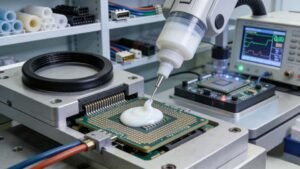
Per- and polyfluoroalkyl substances (PFAS) have become one of the most widely discussed environmental issues in modern chemistry and materials science. These fluorinated compounds have been used for more than 70 years across industrial, consumer, and high-technology products because they provide extremely valuable performance characteristics: oil repellency, water resistance, chemical stability, high temperature resistance, and very low surface energy. However, the same chemical stability that makes PFAS technologically valuable also causes environmental persistence, leading to increasing scrutiny from regulators and researchers worldwide. As governments strengthen restrictions on PFAS production and use, many companies and consumers are asking a fundamental question: which products actually contain the highest levels of PFAS?
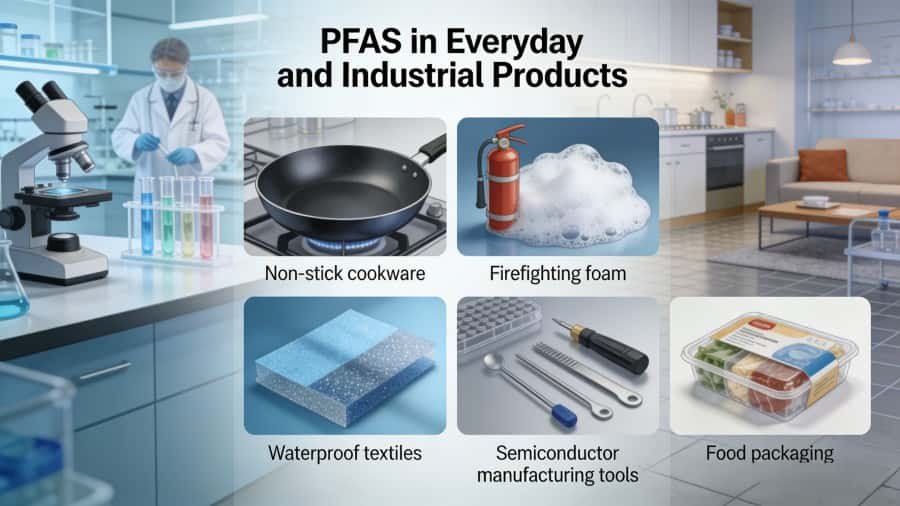
Products with the highest PFAS concentrations are typically those designed for extreme chemical resistance, water and oil repellency, or high-performance industrial processes. These include firefighting foams (AFFF), fluoropolymer-coated cookware, waterproof textiles, grease-resistant food packaging, semiconductor manufacturing chemicals, certain refrigerants, stain-resistant carpets, and specialty industrial coatings. Among these categories, firefighting foams and fluoropolymer materials often contain the highest concentrations of PFAS due to their reliance on fully fluorinated surfactants and polymers.
Understanding where PFAS appears requires examining multiple sectors including consumer goods, industrial manufacturing, electronics, aerospace materials, and advanced chemical processes. The sections below explore the major product categories that historically contain significant PFAS content and explain why these materials are used.
Understanding PFAS and Why They Are Used
PFAS refers to a large family of synthetic chemicals containing carbon-fluorine bonds. These bonds are among the strongest in organic chemistry, giving PFAS remarkable stability.
Key Properties That Drive PFAS Applications
| Property | Functional Advantage | Typical Use |
|---|---|---|
| low surface energy | water & oil repellency | coatings and textiles |
| thermal stability | high temperature resistance | cookware |
| chemical inertness | corrosion resistance | industrial coatings |
| dielectric stability | electronic reliability | semiconductor materials |
Because of these properties, PFAS became essential materials in many industries beginning in the mid-20th century.
Major PFAS Chemical Classes
| PFAS Class | Example Compounds | Typical Applications |
|---|---|---|
| fluoropolymers | PTFE, PVDF | coatings, electronics |
| fluorosurfactants | PFOA, PFOS | firefighting foams |
| fluorotelomers | FTOHs | textile treatments |
| perfluoroethers | PFPE | lubricants |
Products that require strong oil resistance or chemical durability often contain the highest PFAS concentrations.
Firefighting Foams (AFFF): The Highest PFAS Concentration Products
Aqueous Film-Forming Foams (AFFF) used in firefighting are among the most concentrated PFAS products ever produced.
These foams were originally developed for aviation fuel fires because PFAS surfactants create a thin film that spreads rapidly across burning fuel surfaces.
Composition of AFFF Foams
| Component | Function |
|---|---|
| fluorosurfactants | fuel film formation |
| hydrocarbon surfactants | foam stability |
| solvents | spreading |
| stabilizers | long-term storage |
Why PFAS Are Used in Firefighting Foams
PFAS molecules have extremely low surface tension. This allows firefighting foam to spread across hydrocarbon fuel surfaces and block oxygen.
Key PFAS Compounds Historically Used
| PFAS Chemical | Role |
|---|---|
| PFOS | primary surfactant |
| PFOA | manufacturing aid |
| fluorotelomer surfactants | modern replacements |
Due to environmental concerns, many countries are now banning PFAS-based firefighting foams.
Non-Stick Cookware and Fluoropolymer Coatings
One of the most widely recognized PFAS-related products is non-stick cookware.
Fluoropolymers Used in Cookware
| Polymer | Chemical Name | Property |
|---|---|---|
| PTFE | polytetrafluoroethylene | non-stick surface |
| FEP | fluorinated ethylene propylene | smooth coating |
| PFA | perfluoroalkoxy polymer | heat resistant |
These polymers provide:
- non-stick surfaces
- high heat resistance
- chemical stability
- easy cleaning
PFAS in Cookware Manufacturing
Historically, PFOA was used during the manufacturing of PTFE coatings.
However, many manufacturers have eliminated PFOA in recent years.
Despite this, fluoropolymer materials themselves are technically classified as PFAS.
Waterproof and Stain-Resistant Textiles
PFAS have been widely used in textile coatings to make fabrics resistant to water, oil, and stains.
Textile Products Historically Containing PFAS
| Product | PFAS Function |
|---|---|
| outdoor jackets | waterproof coating |
| carpets | stain resistance |
| upholstery | oil repellency |
| sportswear | moisture resistance |
These coatings often use fluorotelomer-based polymers.
Advantages of PFAS Textile Treatments
- long-lasting water repellency
- resistance to oil and grease
- durability under washing
However, PFAS coatings can gradually degrade and release fluorinated compounds into the environment.
Grease-Resistant Food Packaging
Food packaging is another major historical use of PFAS chemicals.
PFAS-Containing Packaging Materials
| Packaging Type | PFAS Function |
|---|---|
| fast food wrappers | grease resistance |
| microwave popcorn bags | oil barrier |
| pizza boxes | oil protection |
| bakery papers | moisture resistance |
PFAS coatings prevent oils and grease from penetrating packaging materials.
Reasons PFAS Were Used
- strong oil barrier properties
- heat resistance
- compatibility with paper materials
Due to health concerns, many packaging manufacturers are now transitioning to PFAS-free alternatives.
Semiconductor Manufacturing Chemicals
PFAS are essential in advanced electronics manufacturing.
PFAS Chemicals in Semiconductor Fabrication
| Chemical | Function |
|---|---|
| perfluorinated gases | plasma etching |
| PFPE lubricants | vacuum pumps |
| fluorinated surfactants | photoresist processing |
Semiconductor manufacturing requires materials with extreme purity and stability.
Fluorinated compounds provide these characteristics.
Key Semiconductor PFAS Uses
- plasma etching gases
- cleaning agents
- high-purity lubricants
- dielectric materials
In this sector, PFAS alternatives are often difficult to develop.
Industrial Fluoropolymers and Engineering Materials
Fluoropolymers are widely used in high-performance industrial equipment.
Common Industrial Fluoropolymers
| Material | Typical Application |
|---|---|
| PTFE | chemical processing equipment |
| PVDF | lithium battery binders |
| ETFE | architectural films |
| FKM | high-temperature seals |
These materials offer:
- corrosion resistance
- chemical inertness
- high temperature performance
Fluoropolymers generally contain very high fluorine content, making them technically PFAS materials.
Cosmetics and Personal Care Products
Some cosmetic products have historically contained PFAS compounds.
Cosmetic Products Potentially Containing PFAS
| Product | Purpose |
|---|---|
| long-lasting lipstick | smooth application |
| waterproof mascara | durability |
| foundation | spreadability |
| sunscreen | texture improvement |
PFAS compounds improve texture and durability in cosmetic formulations.
However, increasing regulatory scrutiny is reducing their use.
Industrial Lubricants and Specialty Fluids
PFAS-based lubricants are used in extremely demanding environments.
High-Performance PFAS Lubricants
| Product Type | Example |
|---|---|
| PFPE lubricants | aerospace equipment |
| fluorinated oils | vacuum pumps |
| specialty greases | semiconductor machinery |
These materials provide:
- extreme temperature stability
- low friction
- chemical resistance
Such properties are difficult to replicate with conventional lubricants.
Relative PFAS Content by Product Category
The following table summarizes typical PFAS content levels.
| Product Category | Typical PFAS Concentration | Environmental Concern |
|---|---|---|
| firefighting foams | very high | major contamination source |
| fluoropolymer coatings | high | polymer persistence |
| textile coatings | moderate | environmental release |
| food packaging | moderate | consumer exposure |
| cosmetics | low to moderate | regulatory scrutiny |
| electronics chemicals | moderate | industrial emissions |
Products designed for extreme chemical resistance tend to contain the highest PFAS concentrations.
The Future of PFAS Products
The PFAS landscape is rapidly changing.
Key Industry Trends
| Trend | Description |
|---|---|
| PFAS regulation | increasing global restrictions |
| PFAS-free coatings | textile innovation |
| alternative firefighting foams | fluorine-free formulations |
| advanced fluoropolymers | lower environmental impact |
Many industries are actively developing alternatives.
However, PFAS materials remain critical in certain advanced technologies.
Final Thoughts
PFAS compounds appear in a wide range of products because they deliver unique performance advantages that are difficult to replicate with other materials. Products with the highest PFAS concentrations typically include firefighting foams, fluoropolymer coatings, waterproof textiles, and certain industrial materials used in electronics manufacturing and chemical processing. While regulatory pressure is driving a transition toward PFAS-free alternatives in some sectors, fluorinated materials will likely remain important in high-performance applications such as aerospace, semiconductor manufacturing, and advanced energy technologies.
Talk With the Fluorochemical Specialists at Sparrow-Chemical
If you are evaluating fluorochemical materials, PFAS-related products, or fluorinated intermediates for industrial applications, the technical team at Sparrow-Chemical can help you identify the right compounds, understand regulatory requirements, and explore safer fluorochemical solutions tailored to your industry.
Learn more or contact the experts:
https://sparrow-chemical.com/