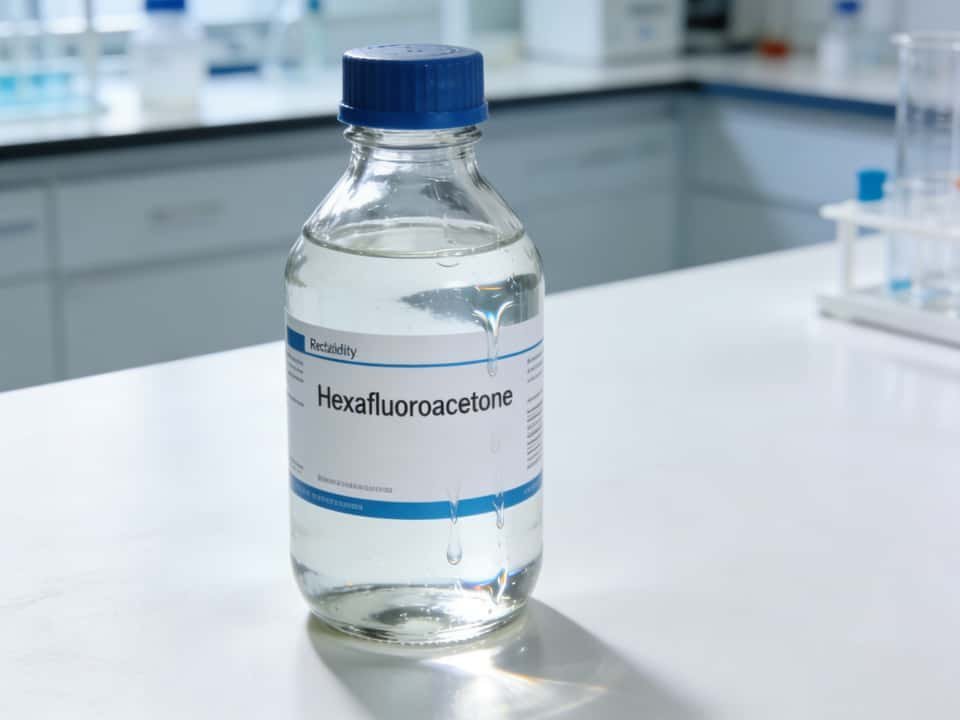
Pharmaceutical chemistry increasingly depends on fluorinated functional groups to enhance metabolic stability, bioavailability, lipophilicity, and receptor binding precision. However, the controlled introduction of trifluoromethyl (CF₃) functionality into drug candidates is synthetically demanding. Direct fluorination methods are often hazardous, multi-step, and low-yield. This is where hexafluoroacetone (HFA) becomes strategically important. Although not itself an active pharmaceutical ingredient (API), HFA functions as a powerful fluorinated intermediate that enables the scalable production of CF₃-containing alcohols, diols, heterocycles, and specialty intermediates widely used in medicinal chemistry. Its value lies not in therapeutic action, but in enabling molecular architectures that define modern drug performance.
Hexafluoroacetone is used in pharmaceuticals primarily as a reactive fluorinated intermediate for synthesizing hexafluoroisopropanol (HFIP), fluorinated alcohols, CF₃-substituted heterocycles, and specialty building blocks that enhance drug stability, bioavailability, and metabolic resistance. By providing a pre-installed dual CF₃ carbonyl framework, it allows efficient and scalable incorporation of trifluoromethyl functionality into drug intermediates without direct hazardous fluorination.
To fully understand its pharmaceutical relevance, we must analyze its structural chemistry, derivative pathways, medicinal benefits of CF₃ groups, reaction mechanisms, solvent roles, and regulatory considerations.
1. Structural Chemistry: Why CF₃ Matters in Drug Design
Hexafluoroacetone has the structure:
(CF₃)₂CO
The dual CF₃ groups provide:
• Strong electron-withdrawing effects
• Increased lipophilicity
• High metabolic stability
• Steric bulk
Importance of CF₃ in Medicinal Chemistry
The trifluoromethyl group is widely used because it:
• Improves membrane permeability
• Enhances binding selectivity
• Increases oxidative stability
• Modulates pKa values
Electronic Comparison
| Functional Group | Electron Effect | Stability Contribution |
|---|---|---|
| CH₃ | Mild donor | Moderate |
| CF₃ | Strong withdrawal | High metabolic resistance |
HFA serves as a convenient gateway for installing CF₃ functionality into drug intermediates.
2. Production of Hexafluoroisopropanol (HFIP) for Pharmaceutical Use
One of the most important pharmaceutical applications of HFA is the synthesis of hexafluoroisopropanol (HFIP).
Reaction Overview
(CF₃)₂CO → (CF₃)₂CHOH
HFIP is widely used in:
• Peptide synthesis
• Specialty solvent systems
• Pharmaceutical intermediate purification
• Protein conformational studies
HFIP Key Properties
| Property | Pharmaceutical Benefit |
|---|---|
| Strong hydrogen bonding | Stabilizes peptide structures |
| High polarity | Dissolves difficult fluorinated intermediates |
| Volatility | Easy removal post-reaction |
HFIP enables reactions that are otherwise difficult with conventional solvents.
3. CF₃-Substituted Heterocycle Synthesis
HFA reacts with:
• Amines
• Hydrazines
• Alcohols
Producing CF₃-substituted heterocycles used as pharmaceutical scaffolds.
Why Heterocycles Matter
Heterocycles form the backbone of many drugs, including:
• Antiviral agents
• Anti-inflammatory drugs
• Oncology therapeutics
CF₃ substitution improves:
• Bioavailability
• Oxidative resistance
• Binding specificity
Medicinal Impact Table
| Feature | Effect on Drug Performance |
|---|---|
| CF₃ substitution | Increased lipophilicity |
| Electron withdrawal | Modified receptor affinity |
| Steric bulk | Improved selectivity |
HFA-derived intermediates facilitate these structural enhancements.
4. Controlled Introduction of Fluorinated Alcohol Groups
Fluorinated alcohols derived from HFA serve as:
• Protecting groups
• Solvent systems
• Reaction intermediates
These alcohols exhibit:
• High acidity compared to hydrocarbon alcohols
• Unique hydrogen bonding behavior
• Enhanced stability under oxidative conditions
Such properties are useful in:
• Multistep API synthesis
• Controlled reactivity modulation
5. Solvent Role in Peptide and Protein Chemistry
HFIP derived from HFA is widely used in peptide chemistry because:
• It disrupts hydrogen bonding networks
• It solubilizes hydrophobic peptides
• It enables conformational control
Peptide-based drugs rely on precise folding behavior, and HFIP provides solvent control not achievable with conventional alcohols.
6. Metabolic Stability Enhancement
CF₃ groups resist oxidative metabolism because:
• C–F bond energy (~485 kJ/mol) is high
• Fluorine shields adjacent carbon atoms
• Oxidative enzymes struggle to cleave C–F bonds
Bond Strength Comparison
| Bond Type | Bond Energy (kJ/mol) |
|---|---|
| C–H | ~413 |
| C–F | ~485 |
This bond strength directly translates into:
• Longer drug half-life
• Reduced metabolic breakdown
• Improved dosage stability
HFA enables efficient incorporation of such stable groups.
7. Lipophilicity and Bioavailability
Fluorination modifies:
• Partition coefficient (logP)
• Membrane permeability
• Blood–brain barrier penetration
CF₃ groups enhance lipophilicity without excessive steric disruption.
Drug Design Impact
| Property | Effect of CF₃ |
|---|---|
| Lipophilicity | Increased |
| Bioavailability | Often improved |
| Stability | Enhanced |
HFA-derived intermediates allow controlled CF₃ placement.
8. Role in Advanced Pharmaceutical Intermediates
HFA is not limited to direct alcohol synthesis; it also enables:
• Fluorinated diols
• Specialty fluorinated ketals
• Fluorinated building blocks for oncology research
These intermediates are used in:
• Multi-step synthesis pipelines
• Late-stage functionalization
9. Process Considerations in Pharmaceutical Manufacturing
Using HFA in pharmaceutical synthesis requires:
• Strict moisture control
• Corrosion-resistant equipment
• Controlled hydrogenation systems
• High-purity analytical verification
Impurities such as HF must be eliminated to meet pharmaceutical-grade standards.
10. Analytical and Regulatory Compliance
Pharmaceutical intermediates derived from HFA must meet:
• ICH impurity guidelines
• Residual solvent standards
• Trace metal limits
Analytical Techniques Used
| Method | Purpose |
|---|---|
| GC-MS | Impurity detection |
| Karl Fischer | Moisture measurement |
| HPLC | Purity verification |
| ICP-MS | Trace metal analysis |
Regulatory compliance is essential before use in API production.
11. Comparative Advantage Over Direct Fluorination
Direct CF₃ introduction often requires:
• Harsh reagents
• Low selectivity
• High cost
HFA provides:
• Pre-installed CF₃ groups
• Efficient one-step reduction
• High-yield transformations
• Scalable industrial synthesis
This efficiency lowers pharmaceutical production complexity.
12. Economic and Strategic Role in Pharma Supply Chain
Although HFA volume is modest compared to bulk chemicals, it supports:
• High-margin drug markets
• Advanced peptide therapeutics
• Fluorinated oncology drugs
• Specialty solvent systems
Its importance lies in enabling high-value molecular engineering.
Final Technical Conclusion
Hexafluoroacetone plays a vital role in pharmaceuticals not as a drug itself, but as a strategic fluorinated intermediate enabling the efficient synthesis of hexafluoroisopropanol, CF₃-substituted heterocycles, fluorinated alcohols, and specialty building blocks used in advanced drug design. Its dual trifluoromethyl substitution enhances metabolic stability, lipophilicity, oxidative resistance, and receptor binding precision in pharmaceutical molecules. By offering a scalable and selective route to incorporate CF₃ functionality, HFA supports modern medicinal chemistry, peptide synthesis, and high-performance pharmaceutical intermediates.
Secure High-Purity Hexafluoroacetone for Pharmaceutical Applications
At Sparrow-Chemical, we supply high-purity hexafluoroacetone suitable for pharmaceutical intermediate synthesis, fluorinated alcohol production, and specialty medicinal chemistry applications. Our materials are produced under strict moisture-controlled conditions and supported with comprehensive analytical documentation.
Visit:
https://sparrow-chemical.com/
If your pharmaceutical development depends on reliable CF₃-functional intermediates, our technical team is ready to support your sourcing and process requirements.