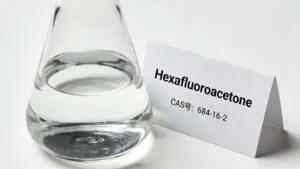
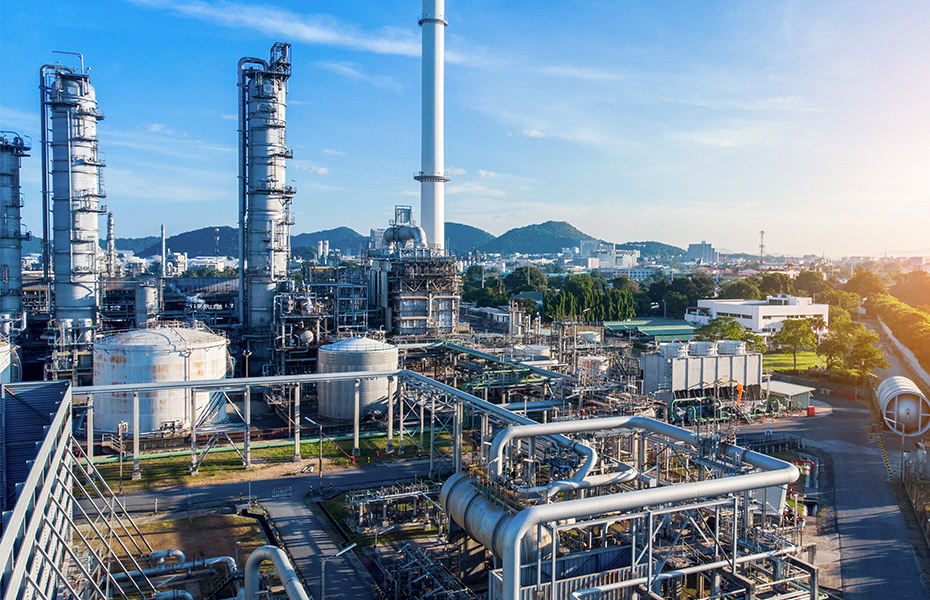
Many specialty chemical buyers assume that because hexafluoroacetone (HFA) is widely referenced in fluoropolymer and specialty fluorochemical literature, it must be produced like commodity solvents such as acetone or methanol. This assumption can lead to procurement misunderstandings, unrealistic price expectations, or inaccurate capacity planning. In reality, hexafluoroacetone sits in a strategic niche of the fluorochemical value chain—produced industrially, yes—but under controlled, specialized, and capital-intensive conditions. The question is not whether it is produced at scale, but what “scale” truly means in the context of fluorinated specialty intermediates.
Hexafluoroacetone is indeed produced industrially at commercial scale, but it is not a bulk commodity chemical. It is manufactured in dedicated fluorochemical facilities using hydrogen fluoride-based halogen exchange processes, with global annual production measured in thousands to tens of thousands of tons rather than millions. Its scale is significant within the fluoropolymer and specialty fluorochemical industry, yet limited compared to basic petrochemical solvents.
Understanding this distinction requires examining production routes, global capacity distribution, downstream demand drivers, infrastructure requirements, and supply chain constraints.
Industrial Manufacturing Infrastructure
Hexafluoroacetone production requires:
• Anhydrous hydrogen fluoride systems
• Chlorinated precursor feedstocks
• Corrosion-resistant reactor materials (Monel, Hastelloy, PTFE-lined vessels)
• Moisture-free processing conditions
• Multi-stage distillation purification
The process typically involves fluorination or halogen exchange reactions using chlorinated intermediates, followed by fractional distillation to achieve high purity.
Unlike acetone production (which relies on the cumene process in massive petrochemical complexes), HFA production occurs in specialized fluorochemical plants integrated with:
• Fluorspar processing
• Hydrogen fluoride production
• Fluoropolymer manufacturing
This vertical integration supports consistent quality and economic viability.
Production Capacity Characteristics
To contextualize scale, compare three categories:
| Chemical | Typical Annual Global Volume | Production Nature |
|---|---|---|
| Acetone | >7 million tons | Commodity petrochemical |
| Tetrafluoroethylene (TFE) | Hundreds of thousands of tons | Large fluorochemical intermediate |
| Hexafluoroacetone | Thousands to tens of thousands of tons | Specialty fluorochemical |
Thus, hexafluoroacetone is industrially produced, but within the framework of specialty fluorine chemistry rather than bulk solvent manufacturing.
Why It Is Produced at Commercial Scale
Hexafluoroacetone plays a critical role in manufacturing:
• Fluoropolymers (e.g., FEP, PFA modifications)
• Specialty fluorinated alcohols
• Agrochemical intermediates
• Advanced electronic materials
• High-performance resins
Its downstream applications justify stable industrial production capacity, particularly in regions with established fluorochemical industries.
Geographic Distribution of Production
Industrial HFA production is concentrated in regions with strong fluorochemical infrastructure:
• China
• United States
• Japan
• Europe
These regions possess:
• Fluorspar mining access
• HF production facilities
• Fluoropolymer manufacturing chains
• Advanced corrosion-resistant plant technology
The supply chain begins with fluorspar (CaF₂), converted into hydrogen fluoride (HF), which is then used for halogen exchange fluorination to produce HFA.
Capital Intensity and Safety Constraints
Large-scale production is limited by:
• Extreme corrosiveness of HF
• Toxicity and environmental controls
• High capital investment for fluorination reactors
• Strict emission regulations
This prevents widespread mass production comparable to hydrocarbon solvents.
Economic Drivers of Production Scale
Production volume is directly linked to:
• Global fluoropolymer demand
• Semiconductor and electronics growth
• Specialty fluorinated chemical expansion
• Regulatory stability around fluorochemicals
If fluoropolymer demand increases, HFA capacity scales accordingly.
Process Integration with Fluoropolymers
In many industrial complexes, hexafluoroacetone is not sold as a bulk standalone product. Instead, it is:
• Produced on-site
• Consumed internally
• Converted into downstream derivatives
This integrated production model stabilizes supply and reduces logistics risks.
Industrial Production Flow Overview
Typical industrial sequence:
Fluorspar → Hydrogen Fluoride → Chlorinated precursor → Fluorination reaction → Hexafluoroacetone → Distillation → Downstream derivative
Each step requires specialized equipment and safety systems.
Purity Requirements Define Scale
Industrial HFA must meet high purity standards:
| Grade | Typical Purity |
|---|---|
| Technical grade | ≥99% |
| Polymer-grade | ≥99.5% |
| Electronic-grade | Ultra-low impurity |
Achieving high purity requires advanced distillation systems, limiting decentralized production.
Regulatory and Environmental Impact
Production facilities must comply with:
• HF emission standards
• Chlorinated by-product management
• Waste acid neutralization
• Fluorinated compound regulation
These regulatory constraints restrict expansion but ensure controlled industrial production.
Market Stability
Hexafluoroacetone demand is relatively stable compared to commodity chemicals because it serves:
• High-value polymer markets
• Specialty chemical sectors
• Advanced materials industries
Demand is less volatile than consumer solvent markets.
Is It Produced in Continuous Plants?
Yes, industrial production typically occurs in:
• Continuous fluorination reactors
• Controlled batch reactors (depending on facility scale)
Continuous production improves efficiency and yield consistency.
Industrial Yield Considerations
Typical process yield factors:
• Conversion efficiency of chlorinated precursor
• Selectivity toward desired HFA
• Minimization of by-products
Yield optimization directly affects economic feasibility.
Storage and Transportation Scale
Hexafluoroacetone is transported in:
• Pressurized cylinders
• Specialized tank containers
• Corrosion-resistant packaging
Transport constraints influence production localization near downstream consumers.
Comparison: Commodity vs Specialty Scale
| Factor | Commodity Chemical | Hexafluoroacetone |
|---|---|---|
| Production Volume | Millions of tons | Thousands–tens of thousands |
| Plant Type | Massive petrochemical | Specialized fluorochemical |
| Feedstock | Crude oil derivatives | HF + chlorinated intermediates |
| Market Price | Low | Premium |
| Integration | Broad market | Vertical integration |
Thus, industrial scale exists—but within the specialty category.
Strategic Importance
Despite lower tonnage compared to acetone, hexafluoroacetone is strategically critical because:
• It enables high-performance fluoropolymers
• It supports electronics and semiconductor materials
• It participates in advanced fluorinated derivative synthesis
Small volume does not mean small importance.
Supply Chain Risk Factors
Industrial production scale can be affected by:
• Fluorspar availability
• HF plant outages
• Environmental policy shifts
• Trade restrictions
Therefore, sourcing from reliable suppliers is essential.
Conclusion
Hexafluoroacetone is indeed produced industrially at commercial scale, but it belongs to the category of specialty fluorochemical intermediates rather than commodity solvents. Its global production volume is measured in thousands to tens of thousands of tons annually, supported by integrated fluorochemical infrastructure. Production requires hydrogen fluoride-based halogen exchange chemistry, corrosion-resistant equipment, and strict environmental controls. It is large enough to serve global fluoropolymer and advanced material industries, yet specialized enough to require dedicated manufacturing facilities.
Partner with a Reliable Hexafluoroacetone Supplier
At Sparrow-Chemical, we operate within the global fluorochemical supply chain and understand the infrastructure, purity standards, and compliance requirements behind industrial-scale hexafluoroacetone production. Whether your project involves fluoropolymers, specialty fluorinated intermediates, or advanced materials, we provide stable supply, full documentation, and technical support.
Visit:
https://sparrow-chemical.com/
If your process depends on consistent fluorochemical quality, let’s discuss your requirements and secure a dependable source.