Pharmaceutical researchers constantly struggle with a critical challenge: how to make drug molecules more effective, stable, and selective while minimizing side effects. Many promising drug candidates fail during development because they degrade too quickly in the body, lack sufficient bioavailability, or interact with unintended biological targets. These problems can dramatically increase research costs and delay life-saving treatments. One of the most powerful solutions discovered by medicinal chemists is the strategic use of fluorochemicals. By incorporating fluorine atoms into drug molecules, scientists can dramatically enhance metabolic stability, membrane permeability, and pharmacological activity.
Fluorochemicals play a crucial role in modern pharmaceuticals because fluorine atoms can significantly modify a drug molecule’s chemical behavior. Incorporating fluorine can improve metabolic stability, increase lipophilicity, enhance binding affinity to biological targets, and extend drug half-life. As a result, nearly 20–25% of all approved pharmaceutical drugs now contain at least one fluorine atom, making fluorine chemistry one of the most important tools in medicinal chemistry.
Understanding why fluorine works so effectively in pharmaceutical design requires examining its unique chemical properties, molecular interactions, and real-world drug development applications. The following technical guide explores the role of fluorochemicals in pharmaceuticals, their chemical mechanisms, major drug classes, production methods, safety considerations, and future innovation trends.
Unique Chemical Properties of Fluorine That Benefit Drug Design
Fluorine occupies a special position in medicinal chemistry due to its exceptional electronegativity, small atomic size, and strong carbon–fluorine bond. These characteristics enable fluorine atoms to influence biological activity in ways that other elements cannot easily replicate.
Several fundamental properties explain why fluorochemicals are so valuable in pharmaceutical development.
Atomic Characteristics of Fluorine
| Property | Fluorine | Comparison with Other Halogens |
|---|---|---|
| Atomic number | 9 | Smallest halogen |
| Electronegativity (Pauling scale) | 3.98 | Highest of all elements |
| C–F bond energy | ~485 kJ/mol | Stronger than C–Cl or C–Br |
| Atomic radius | 64 pm | Very small |
| Polarizability | Low | Highly stable bonds |
These properties allow fluorine to influence molecular structure without drastically increasing molecular size.
Effects of Fluorination on Drug Molecules
Fluorine atoms can modify pharmaceutical molecules in several ways:
Electronic Effects
Fluorine strongly withdraws electrons due to its electronegativity. This alters the electron distribution of nearby functional groups, affecting chemical reactivity and receptor binding.
Metabolic Stability
The carbon-fluorine bond is extremely strong, making fluorinated molecules resistant to metabolic oxidation by liver enzymes.
Lipophilicity Adjustment
Fluorine substitution can increase a molecule’s lipophilicity, improving its ability to cross cell membranes.
Hydrogen Bonding Modulation
Fluorine influences hydrogen bonding networks, affecting protein–ligand interactions.
Influence of Fluorine Substitution Patterns
| Substitution Type | Effect on Drug Behavior |
|---|---|
| Monofluorination | Alters pKa and polarity |
| Difluorination | Stabilizes molecular conformation |
| Trifluoromethyl group (CF₃) | Strong lipophilicity and electron withdrawal |
| Fluoroaromatic substitution | Enhances receptor binding |
These effects allow medicinal chemists to fine-tune molecular properties with remarkable precision.
Why Fluorine Improves Drug Performance
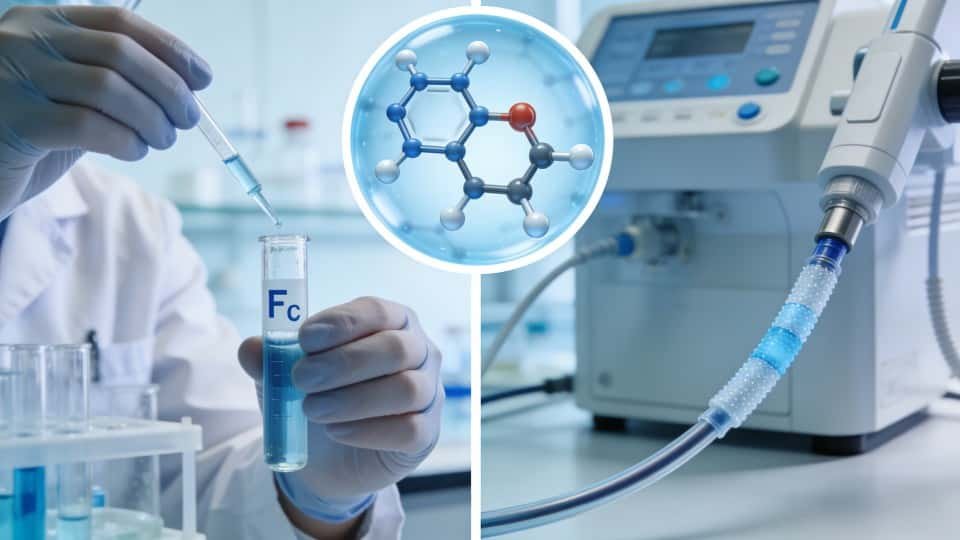
Fluorination can dramatically enhance the pharmacokinetic and pharmacodynamic properties of pharmaceuticals.
Improved Bioavailability
Fluorine atoms increase lipid solubility, allowing drug molecules to cross biological membranes more efficiently. This improves oral absorption and tissue penetration.
Enhanced Target Binding
Fluorinated groups can strengthen molecular interactions with enzyme active sites or receptor binding pockets.
Examples include:
• Electrostatic interactions
• Hydrophobic interactions
• Dipole interactions
Increased Half-Life
Fluorination reduces metabolic degradation by enzymes such as cytochrome P450.
Lower Dosage Requirements
Improved potency often means lower therapeutic doses are required, reducing side effects.
Drug Development Advantages
| Benefit | Pharmaceutical Impact |
|---|---|
| Increased metabolic stability | Longer drug activity |
| Improved membrane permeability | Better absorption |
| Enhanced receptor affinity | Greater potency |
| Reduced degradation | Longer shelf life |
These improvements explain why fluorinated pharmaceuticals dominate many therapeutic categories.
Major Classes of Fluorinated Pharmaceuticals
Fluorochemicals are present in a wide variety of drug classes.
Fluorinated antivirals play a critical role in treating viral infections.
Examples include:
| Drug | Target Virus | Fluorine Role |
|---|---|---|
| Favipiravir | Influenza | Polymerase inhibition |
| Sofosbuvir | Hepatitis C | RNA replication blocking |
| Trifluridine | Herpes virus | DNA synthesis disruption |
Anticancer Drugs
Fluorinated chemotherapeutic agents are widely used in oncology.
| Drug | Mechanism |
|---|---|
| 5-Fluorouracil | Thymidylate synthase inhibition |
| Capecitabine | Prodrug of 5-FU |
| Gemcitabine | DNA replication inhibition |
Antidepressants and Neurological Drugs
Several CNS drugs use fluorine to improve blood-brain barrier penetration.
| Drug | Indication |
|---|---|
| Fluoxetine | Depression |
| Paroxetine | Anxiety disorders |
| Fluvoxamine | OCD |
Anti-Inflammatory and Steroid Drugs
Fluorinated steroids possess enhanced potency.
Examples include:
• Dexamethasone
• Fluticasone
• Fluocinolone
Fluorine substitution dramatically increases anti-inflammatory activity.
Fluorination Techniques Used in Pharmaceutical Manufacturing
Introducing fluorine into drug molecules requires specialized synthetic chemistry.
Electrophilic Fluorination
This method uses reagents that deliver electrophilic fluorine atoms.
Common reagents include:
| Reagent | Application |
|---|---|
| N-Fluorobenzenesulfonimide (NFSI) | Aromatic fluorination |
| Selectfluor | Electrophilic fluorination |
| F₂ gas | Industrial fluorination |
Nucleophilic Fluorination
Nucleophilic fluorination introduces fluoride ions into molecules.
| Reagent | Use |
|---|---|
| Potassium fluoride | Aromatic substitution |
| Cesium fluoride | Alkyl fluorination |
| Tetrabutylammonium fluoride | Organic synthesis |
Radical Fluorination
Radical reactions enable fluorination of hydrocarbons.
Catalytic Fluorination
Transition-metal catalysts enable selective fluorination reactions.
| Catalyst | Reaction Type |
|---|---|
| Palladium | C–H fluorination |
| Copper | Aromatic fluorination |
| Silver | Radical fluorination |
These technologies allow precise fluorine incorporation into complex drug molecules.
Fluorinated Building Blocks in Pharmaceutical Chemistry
Fluorinated intermediates serve as key building blocks for many pharmaceutical compounds.
Common Fluorinated Functional Groups
| Functional Group | Chemical Formula | Pharmaceutical Effect |
|---|---|---|
| Fluoroalkyl | –CF₃ | Lipophilicity |
| Difluoromethylene | –CF₂– | Metabolic stability |
| Fluoroaromatic | Ar–F | Receptor binding |
| Perfluoroalkyl | –CₙF₂ₙ₊₁ | Chemical stability |
Widely Used Fluorinated Intermediates
Examples include:
• Hexafluoroacetone
• Fluorobenzene derivatives
• Trifluoroacetic acid
• Fluoroanilines
• Fluoropyridines
These intermediates enable the construction of complex pharmaceutical molecules.
Safety and Environmental Considerations
While fluorochemicals provide important pharmaceutical benefits, they must be handled carefully.
Toxicity Considerations
Some fluorinated compounds can be toxic if improperly handled.
| Compound Type | Risk |
|---|---|
| Hydrogen fluoride | Highly corrosive |
| Perfluoro compounds | Environmental persistence |
| Fluoroalkyl substances | Potential bioaccumulation |
Strict manufacturing protocols ensure safe handling.
Pharmaceutical Safety Evaluation
Drug candidates undergo extensive testing:
• Toxicology studies
• Environmental impact analysis
• Regulatory approval processes
These safeguards ensure fluorinated drugs remain safe for patients.
Global Market for Fluorinated Pharmaceuticals
Fluorochemicals play a central role in the pharmaceutical industry’s supply chain.
Market Statistics
| Metric | Value |
|---|---|
| Share of drugs containing fluorine | ~20–25% |
| Share of new drugs with fluorine | ~30–40% |
| Global fluorochemicals market | >$20 billion |
| Pharmaceutical share | ~25% |
Key Drivers of Growth
• Increasing demand for advanced therapeutics
• Rising antiviral and oncology drug development
• Advances in fluorination technology
• Expanding biotechnology sector
Fluorinated compounds will remain a cornerstone of modern drug discovery.
Emerging Innovations in Fluorinated Drug Design
Research in fluorine chemistry continues to evolve rapidly.
Precision Fluorination
New catalytic methods enable site-specific fluorination of complex molecules.
Fluorinated Biologics
Scientists are exploring fluorinated peptides and proteins.
Radiopharmaceuticals
Fluorine-18 isotopes are used in PET imaging.
| Isotope | Application |
|---|---|
| Fluorine-18 | Medical imaging |
| Fluorinated tracers | Cancer diagnosis |
These innovations demonstrate fluorine’s expanding role in medicine.
Conclusion
Fluorochemicals have transformed modern pharmaceutical science. Their unique chemical properties allow medicinal chemists to design drugs with improved stability, potency, and bioavailability. From antiviral medications to cancer therapies and neurological drugs, fluorinated molecules now represent a significant portion of the global pharmaceutical market. As fluorination technologies continue to advance, the importance of fluorochemicals in drug discovery and production will only grow.
Work With Reliable Fluorochemical Experts
If you are searching for high-quality fluorochemicals, fluorinated intermediates, or customized fluorination solutions, professional sourcing and manufacturing expertise can make a significant difference in pharmaceutical development and industrial chemical production.
Sparrow Chemicals works with global partners to supply reliable fluorochemical materials and specialty chemical solutions for pharmaceutical research and advanced chemical manufacturing.
Learn more or contact us:
https://sparrow-chemical.com/