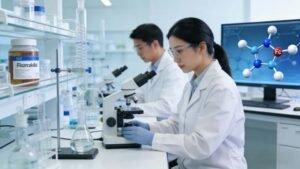
Modern chemical industries—from pharmaceuticals and agrochemicals to electronics and advanced materials—depend heavily on highly specialized molecular building blocks. One of the most strategically important categories among these building blocks is fluorinated intermediates. Yet many manufacturers, procurement specialists, and product developers struggle to clearly understand what fluorinated intermediates are, how they are produced, and why they play such a crucial role in high-performance chemical products. Misunderstanding these compounds can lead to inefficient formulation design, poor supplier selection, or even costly production challenges.
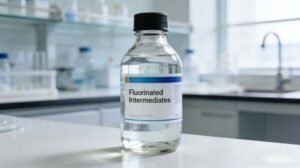
Fluorinated intermediates are organic or inorganic chemical compounds that contain fluorine atoms and serve as key building blocks in the synthesis of more complex fluorinated molecules. They are widely used in pharmaceuticals, agrochemicals, specialty polymers, refrigerants, and electronic materials because fluorine atoms dramatically modify chemical stability, biological activity, thermal resistance, and hydrophobicity. By strategically incorporating fluorinated intermediates during synthesis, chemists can design molecules with superior performance characteristics that would otherwise be impossible to achieve.
To truly understand the power of fluorinated intermediates, it is essential to explore not only their definition but also their structural chemistry, synthesis pathways, industrial applications, and supply chain considerations. This comprehensive technical guide explains these aspects in depth, offering practical insights for engineers, chemists, procurement professionals, and industrial decision-makers.
Understanding the Chemical Nature of Fluorinated Intermediates
Fluorinated intermediates occupy a unique position in chemical synthesis because of the unusual characteristics of fluorine. Fluorine is the most electronegative element in the periodic table, and the carbon–fluorine bond is among the strongest single bonds found in organic chemistry. These properties allow fluorinated molecules to demonstrate exceptional chemical resistance, thermal stability, and biological activity.
In practical industrial chemistry, fluorinated intermediates are compounds that contain one or more fluorine atoms and are used during multistep synthesis to create more complex fluorinated chemicals. They are not usually sold as consumer products but instead function as precursors within chemical production processes.
Key structural characteristics of fluorinated intermediates include:
- Presence of C–F bonds (carbon-fluorine bonds)
- Often derived from halogen exchange reactions
- May contain functional groups such as alcohols, acids, amines, or aromatics
- Frequently used in stepwise organic synthesis
Key Molecular Features
Several molecular properties distinguish fluorinated intermediates from non-fluorinated compounds:
- High electronegativity influence: Fluorine strongly attracts electrons.
- Thermal stability: Fluorinated molecules often resist degradation at high temperatures.
- Chemical inertness: Strong C–F bonds reduce reactivity in unwanted pathways.
- Hydrophobic behavior: Fluorine substitution increases water resistance.
- Biological selectivity: In pharmaceuticals, fluorination can modify metabolic pathways.
These characteristics explain why fluorinated intermediates are used extensively in industries requiring high-performance materials.
Table: Fundamental Chemical Properties of Fluorinated Intermediates
| Property | Typical Value / Behavior | Industrial Significance |
|---|---|---|
| C–F Bond Energy | ~485 kJ/mol | Provides exceptional chemical stability |
| Electronegativity of Fluorine | 3.98 (Pauling scale) | Alters electronic distribution |
| Thermal Stability | High | Useful in aerospace and electronics |
| Lipophilicity Influence | Increased | Important for pharmaceutical design |
| Hydrolytic Stability | Often strong | Enhances durability in harsh environments |
These molecular properties are precisely why fluorinated intermediates are indispensable across multiple industrial sectors.
Classification of Fluorinated Intermediates
Fluorinated intermediates are not a single class of chemicals but rather a broad category encompassing hundreds of molecular types. They can be classified based on structural chemistry, functional groups, or application domains.
Structural Classification
One of the most common ways to categorize fluorinated intermediates is based on their molecular structure.
| Category | Example Compounds | Typical Applications |
|---|---|---|
| Fluoroalkanes | Fluoromethane, Difluoroethane | Refrigerants, propellants |
| Fluoroaromatics | Fluorobenzene, Trifluoromethylbenzene | Pharmaceuticals |
| Fluoroalcohols | Trifluoroethanol | Solvents, reagents |
| Fluoroketones | Hexafluoroacetone | Polymer synthesis |
| Fluorocarboxylic acids | Trifluoroacetic acid | Organic synthesis |
Functional Group Classification
Another important classification method focuses on functional groups within fluorinated intermediates.
| Functional Group | Representative Intermediates | Industrial Role |
|---|---|---|
| Fluoroamines | Fluoroaniline derivatives | Pharmaceutical synthesis |
| Fluorinated esters | Fluoroacetates | Agrochemical production |
| Fluorinated nitriles | Fluoroacetonitrile | Advanced materials |
| Fluorinated aldehydes | Trifluoroacetaldehyde | Organic synthesis |
Understanding these classifications helps chemists select the appropriate intermediates for specific synthesis pathways.
Industrial Production Methods for Fluorinated Intermediates
Producing fluorinated intermediates requires specialized chemical processes because fluorine chemistry is highly reactive and often hazardous. Industrial fluorination technologies have evolved significantly over the past century to allow safe and efficient manufacturing.
Major Industrial Fluorination Methods
| Production Method | Key Reagents | Advantages | Limitations |
|---|---|---|---|
| Direct Fluorination | F₂ gas | High fluorine incorporation | Highly reactive |
| Halogen Exchange | HF, KF | Controlled fluorination | Multi-step reactions |
| Electrochemical Fluorination | HF electrolyte | Suitable for perfluorinated compounds | Energy intensive |
| Selective Catalytic Fluorination | Catalysts + HF | High selectivity | Catalyst cost |
Example Reaction Pathway
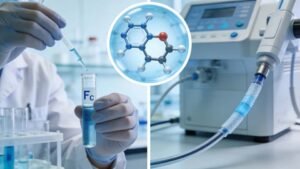
One of the most widely used approaches is halogen exchange fluorination, where chlorine atoms are replaced with fluorine atoms.
| Reaction Stage | Description |
|---|---|
| Starting compound | Chlorinated organic molecule |
| Fluorination agent | Hydrogen fluoride (HF) |
| Catalyst | Metal fluoride catalyst |
| Product | Fluorinated intermediate |
These reaction technologies are critical to producing the wide variety of fluorinated intermediates required by modern industry.
Applications of Fluorinated Intermediates in Key Industries
Fluorinated intermediates are indispensable in numerous industrial sectors due to their ability to modify molecular performance.
Pharmaceutical Industry
Approximately 20–25% of modern pharmaceuticals contain fluorine atoms. Fluorinated intermediates enable the synthesis of drugs with improved biological activity and metabolic stability.
Common pharmaceutical applications include:
- Antiviral drugs
- Anti-cancer compounds
- Anti-inflammatory medications
- Central nervous system drugs
Agrochemical Industry
Fluorinated intermediates are also essential in pesticide and herbicide production.
| Agrochemical Category | Role of Fluorinated Intermediates |
|---|---|
| Herbicides | Increased environmental stability |
| Fungicides | Improved biological effectiveness |
| Insecticides | Enhanced molecular penetration |
Electronics and Semiconductor Industry
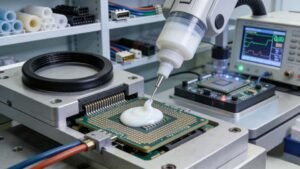
In semiconductor manufacturing, fluorinated chemicals are critical for:
- Plasma etching
- Surface cleaning
- Photoresist processing
- Chip fabrication
Polymer and Materials Industry
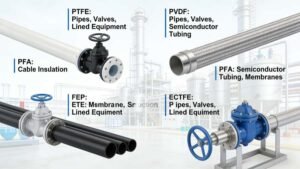
Fluorinated intermediates serve as precursors for high-performance fluoropolymers.
| Polymer | Fluorinated Intermediate | Application |
|---|---|---|
| PTFE | Tetrafluoroethylene | Non-stick coatings |
| PVDF | Vinylidene fluoride | Batteries, membranes |
| FEP | Hexafluoropropylene | Electrical insulation |
These materials are widely used in aerospace, electronics, chemical processing, and medical devices.
Market Demand and Supply Chain for Fluorinated Intermediates
The global demand for fluorinated intermediates continues to grow as advanced technologies require increasingly specialized materials.
Major Market Drivers
Several key trends are driving global demand:
- Expansion of pharmaceutical R&D
- Growth in semiconductor manufacturing
- Demand for advanced polymer materials
- Development of new energy technologies
Table: Global Fluorinated Intermediates Market Segments
| Industry Sector | Market Share Estimate | Growth Drivers |
|---|---|---|
| Pharmaceuticals | ~35% | Drug innovation |
| Agrochemicals | ~25% | Crop protection |
| Electronics | ~20% | Semiconductor demand |
| Polymers & Materials | ~15% | Advanced materials |
| Other | ~5% | Specialty applications |
Supply Chain Considerations
Manufacturing fluorinated intermediates requires:
- Specialized fluorination reactors
- Strict safety systems
- Advanced purification technology
- Regulatory compliance
As a result, only a limited number of chemical manufacturers globally possess the expertise to produce these compounds at industrial scale.
Safety, Environmental, and Regulatory Considerations
Handling fluorinated intermediates requires careful safety management due to the reactive nature of fluorine chemistry.
Key considerations include:
- Hydrogen fluoride toxicity
- Fluorinated gas containment
- Environmental regulations
- Waste treatment
Regulatory Frameworks
| Regulation | Region | Focus |
|---|---|---|
| REACH | European Union | Chemical registration |
| TSCA | United States | Chemical safety |
| RoHS | Global electronics | Hazardous substance restriction |
Manufacturers must ensure compliance with these regulations when producing and distributing fluorinated intermediates.
Technological Trends in Fluorinated Intermediate Development
Advances in synthetic chemistry are enabling new types of fluorinated intermediates.
Emerging Technologies
Key research directions include:
- Selective fluorination catalysts
- Green fluorination chemistry
- Continuous-flow fluorination reactors
- AI-driven molecule design
These innovations are improving safety, efficiency, and sustainability in fluorochemical manufacturing.
Table: Emerging Fluorination Technologies
| Technology | Benefit |
|---|---|
| Continuous-flow reactors | Improved reaction control |
| Photochemical fluorination | Energy efficiency |
| Catalytic fluorination | Higher selectivity |
| Electrochemical fluorination | Reduced waste |
Such technologies are expected to reshape the fluorochemical industry in the coming decades.
Conclusion
Fluorinated intermediates are among the most important building blocks in modern chemical manufacturing. Their unique molecular properties—driven by the exceptional strength and electronegativity of fluorine—allow chemists to design high-performance pharmaceuticals, agrochemicals, electronic materials, and advanced polymers. Understanding their chemical structure, production technologies, industrial applications, and supply chain considerations is essential for any organization operating within the fluorochemical ecosystem.
As industries continue to demand more sophisticated materials with higher stability, durability, and performance, the role of fluorinated intermediates will only become more significant. Advances in fluorination technology and green chemistry are expected to further expand their industrial potential while improving safety and environmental sustainability.
Talk to the Fluorochemical Experts at Sparrow Chemicals
If your business requires reliable fluorinated intermediates, custom synthesis capabilities, or expert guidance in fluorochemical applications, the team at Sparrow Chemicals is ready to help.
From pharmaceutical intermediates to specialty fluorinated compounds for advanced materials, we support global manufacturers with high-quality products and technical expertise.
Explore more or contact us directly:
https://sparrow-chemical.com/