
Blogs
How Does R-404A Refrigerant Work?
Refrigeration systems using R-404A are widely deployed in commercial cold storage, supermarket freezers, and transport refrigeration—but many operators
Explore how fluorochemicals support refrigeration, pharmaceuticals, agrochemicals, semiconductors, coatings, specialty synthesis, advanced materials, and high-performance industrial processing. Built for global B2B buyers who need application-driven supply, stable specifications, and practical technical support.
The Strategic Role of Fluorochemicals in Modern Industry
Fluorochemicals are among the most functionally versatile and technically valuable classes of industrial chemicals. Their importance lies not only in their diversity of structures, but in the unique properties introduced by fluorine atoms within molecular systems.
In many applications, fluorochemicals are selected because they enable performance levels that conventional materials cannot easily achieve. Depending on the molecular design and formulation, these materials can provide exceptional chemical resistance, thermal stability, dielectric performance, low surface energy, and enhanced functional selectivity.
Today, fluorochemicals are deeply integrated into critical industries such as refrigeration, pharmaceuticals, agrochemicals, electronics, advanced materials, coatings, energy systems, and specialty chemical manufacturing. Their role continues to expand as industries demand higher efficiency, durability, and process precision.
Fluorochemicals are not defined by a single function. Their value comes from a combination of performance characteristics that can be tailored for specific industrial needs.
Fluorinated compounds often exhibit strong resistance to acids, bases, solvents, oxidation, and environmental degradation. This makes them suitable for use in harsh chemical environments, corrosion-resistant systems, and long-life materials.
Many fluorochemicals maintain stability across a wide temperature range. This allows their use in both high-temperature industrial processes and low-temperature systems such as refrigeration and cryogenic applications.
Fluorochemicals can significantly reduce surface energy, resulting in water repellency, oil repellency, anti-fouling behavior, and easy-clean properties. These characteristics are widely used in coatings, textiles, and functional surfaces.
Selected fluorochemicals offer strong dielectric performance and electrical insulation, making them valuable in electronics, semiconductors, and high-performance electrical systems.
Fluorine substitution can modify molecular polarity, reactivity, lipophilicity, and stability. This allows chemists to fine-tune compounds for pharmaceuticals, agrochemicals, and specialty synthesis.
Fluorochemicals support a wide range of industries. The following sections outline the most important application areas and how these materials are used in practice.
Fluorochemicals have long been essential in refrigeration and cooling technologies. Their ability to efficiently transfer heat, operate under controlled pressure conditions, and maintain stability across temperature ranges makes them highly suitable for HVAC and industrial cooling systems.
They are widely used in:
In addition to direct refrigerant use, fluorochemicals are also involved in the production of refrigerant intermediates and specialized heat transfer fluids.
Fluorochemicals play a critical role in modern pharmaceutical chemistry. The incorporation of fluorine into active molecules can significantly influence biological activity, metabolic stability, and molecular selectivity.
Fluorinated intermediates are widely used in:
Fluorine substitution often improves pharmacokinetic properties, making fluorochemicals an important tool in developing more effective and stable therapeutic compounds.
In agrochemical formulations, fluorochemicals are used to enhance the performance and stability of crop protection products. Fluorinated molecules can improve the biological activity, environmental behavior, and durability of herbicides, insecticides, and fungicides.
Applications include:
Their use supports more efficient and targeted agricultural solutions.
The electronics and semiconductor sectors rely heavily on high-purity fluorochemicals for precision manufacturing processes. In these applications, even minor impurities can affect performance, making material quality and consistency critical.
Fluorochemicals are used in:
Their role is essential in maintaining process integrity and enabling advanced electronic technologies.
Fluorochemicals serve as key feedstocks for the production of fluoropolymers and high-performance materials. These materials are known for their durability, chemical resistance, weatherability, and low friction characteristics.
Typical applications include:
Fluoropolymers derived from fluorochemicals are widely used in industries that require long-term reliability under extreme conditions.
One of the most commercially important uses of fluorochemicals is in surface modification and coating technologies. Due to their low surface energy, fluorinated compounds are ideal for creating functional surfaces.
Applications include:
These applications are especially important where durability, cleanliness, and performance consistency are required.
Fluorochemicals are widely used within the chemical industry itself, serving as intermediates, reagents, and functional additives in synthesis processes.
They support:
Their ability to influence reaction behavior and product properties makes them highly valuable in advanced chemical processes.
Fluorochemicals are increasingly important in energy-related applications, including battery technologies, electrical systems, and thermal management solutions.
They are used in:
As energy systems become more complex, fluorochemicals play a growing role in improving efficiency, safety, and system stability.
In applications where cleanliness and residue control are critical, fluorinated solvents offer advantages that conventional solvents may not provide.
Typical uses include:
These applications require careful matching of solvent properties to the process requirements.
Selecting the right fluorochemical requires a clear understanding of the intended application rather than relying only on product names or categories.
Key considerations include:
A structured selection approach ensures both technical performance and commercial efficiency.
Fluorochemicals are not simply materials — they are functional enablers across modern industry. Their ability to deliver targeted performance makes them essential in applications where reliability, efficiency, and precision are required.
As industries continue to evolve toward higher standards of performance and sustainability, the role of fluorochemicals will remain critical in enabling advanced solutions across global markets.
Whether you are sourcing fluorinated intermediates, specialty solvents, refrigerant-related chemicals, or performance materials, having the right product aligned with your application makes all the difference.
At Sparrow-Chemical, we work with customers across industries to provide practical, application-focused fluorochemical supply solutions — from standard products to project-based requirements.
Talk to our team today to discuss your application or request a quote.
18 major series of fluorinated intermediates, salts, and advanced fluorochemicals.
Each batch is tested with HPLC, GC-MS, NMR, and meets international standards.
From lab-scale synthesis to full industrial manufacturing with stable global supply.
Tailor-made fluorine compounds and contract manufacturing to meet specific customer needs.
Strong technical support for pharmaceuticals, agrochemicals, electronics, and specialty materials.
Safe packaging and efficient logistics to ensure timely supply worldwide.
Fluorochemicals are used in a wide range of industries, including refrigeration, pharmaceuticals, agrochemicals, semiconductors, coatings, advanced materials, electronics, energy systems, and specialty chemical manufacturing. Their value comes from the unique properties introduced by fluorine, such as chemical resistance, thermal stability, dielectric performance, low surface energy, and molecular design flexibility.
Fluorochemicals are important because they can deliver performance characteristics that many conventional chemicals cannot easily achieve. Depending on the product type, they may improve temperature resistance, solvent resistance, water and oil repellency, insulation properties, reaction selectivity, process cleanliness, or long-term durability in demanding industrial environments.
Fluorochemicals are commonly used in:
No. Refrigerants are only one major application category. Fluorochemicals are also widely used as intermediates in pharmaceutical and agrochemical synthesis, as specialty solvents in precision cleaning, as additives in coatings and surface treatment, and as feedstocks for fluoropolymers and other advanced materials.
The presence of fluorine can significantly change the behavior of a molecule. Fluorochemicals often show stronger chemical stability, lower surface energy, improved thermal performance, or enhanced functional properties compared with non-fluorinated alternatives. This makes them particularly valuable in high-performance and technically demanding applications.
Fluorinated intermediates are mainly used in the synthesis of pharmaceuticals, agrochemicals, specialty chemicals, dyes, pigments, and advanced functional materials. They are selected because fluorine can improve molecular stability, selectivity, biological activity, and overall performance of downstream products.
In pharmaceutical chemistry, fluorine is often introduced to optimize the behavior of active molecules. Fluorochemical intermediates may help improve metabolic stability, bioavailability, lipophilicity, selectivity, and therapeutic performance. As a result, fluorinated structures are widely used in modern drug development and production.
In agrochemical applications, fluorinated compounds are often used to enhance the activity, selectivity, environmental behavior, or stability of crop protection products. Fluorinated intermediates can play an important role in the manufacture of herbicides, insecticides, fungicides, and other agricultural chemicals.
Fluorochemicals are used in electronics and semiconductor manufacturing for applications such as chamber cleaning, etching-related processing, precision cleaning, dielectric fluids, and specialty electronic materials. In these fields, purity, stability, and process compatibility are especially important.
Many fluorochemicals have low surface energy, which makes them useful in coatings and treatment systems that require water repellency, oil repellency, anti-fouling properties, stain resistance, release performance, or easy-clean surfaces. They are used in industrial coatings, textiles, paper treatment, construction materials, and specialty formulations.
Yes. Fluorochemicals are widely used in the production of advanced materials and fluoropolymers that require chemical resistance, weatherability, high thermal stability, electrical insulation, and low friction. These materials are commonly used in industrial components, linings, seals, films, and high-performance systems.
The advantages of fluorochemicals may include:
The exact benefit depends on the specific fluorochemical structure and application.
Choosing the right fluorochemical depends on several factors, including:
A practical selection process usually starts with defining the end use and the main technical requirement.
To receive a more accurate recommendation, it is helpful to provide:
This helps the supplier understand your project more efficiently.
In some industries, yes. Applications such as pharmaceuticals, semiconductors, electronics, and certain specialty syntheses often require tighter purity control and stricter impurity management than general industrial applications. The required purity level depends on how the material will be used.
Many fluorochemicals are selected for high-temperature or thermally demanding environments because of their thermal stability. However, suitability depends on the specific compound, formulation, and operating conditions. Product selection should always be matched to the actual process temperature and use environment.
Yes. Fluorochemicals are also important in low-temperature applications, especially in refrigeration, cooling systems, heat transfer fluids, and some specialty process environments. Their performance at low temperatures is one reason they are widely used in HVAC and related industries.
Yes. One of the most important reasons fluorochemicals are used in materials and formulations is their ability to improve resistance to aggressive chemicals, solvents, oxidation, and harsh operating environments. This makes them useful in coatings, linings, polymers, and industrial systems that require long-term durability.
Yes. Certain fluorochemicals are used in precision cleaning, electronics cleaning, degreasing, and specialty solvent systems where residue control, volatility behavior, and material compatibility are critical. These applications usually require careful matching between the fluid and the process.
Depending on the product and supplier, commonly available documents may include:
For project-based inquiries, additional technical communication may also be needed.
Yes. Many fluorochemicals, especially fluorinated intermediates, are used in custom synthesis and project-based chemical manufacturing. In these cases, consistent quality, route suitability, and supply reliability are especially important.
Application-based sourcing is important because the same fluorochemical may perform very differently depending on the process, industry, purity requirement, and formulation system. A product should not be selected only by name. It should be matched to the actual technical and commercial requirements of the intended application.
Buyers typically look for:
A strong supplier should support both product delivery and application alignment.
Yes. Fluorochemicals are used in both large-scale standard markets and highly specialized technical applications. Some products are used in broad industrial sectors such as refrigeration, while others are selected for highly specific requirements in pharmaceuticals, electronics, or advanced materials.
Whether you are sourcing fluorinated intermediates, refrigerant-related chemicals, performance additives, specialty solvents, or application-oriented fluorochemical materials, our team is ready to support your inquiry.
Refrigeration systems using R-404A are widely deployed in commercial cold storage, supermarket freezers, and transport refrigeration—but many operators
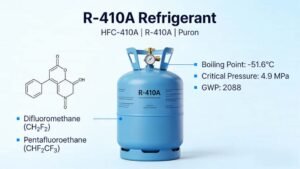
R-410A refrigerant is widely used in modern air conditioning systems, yet many buyers, engineers, and HVAC professionals only
Aluminum fluoride is one of those industrial chemicals that many buyers encounter only when they begin working seriously
Fluorochemicals are widely regarded as chemically inert, thermally stable, and highly resistant to degradation—properties that make them indispensable