R-410A refrigerant is widely used in modern air conditioning systems, yet many buyers, engineers, and HVAC professionals only understand it at a superficial level—as a “replacement for R-22.” That simplified view can lead to costly mistakes in system selection, servicing, compatibility, regulatory compliance, and long-term environmental planning. With global refrigerant regulations tightening and new low-GWP alternatives emerging, understanding R-410A in depth is no longer optional—it is essential for anyone involved in cooling systems, procurement, or chemical supply chains.
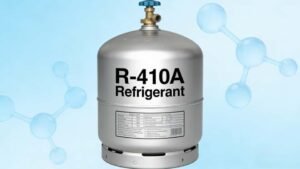
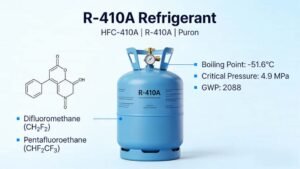
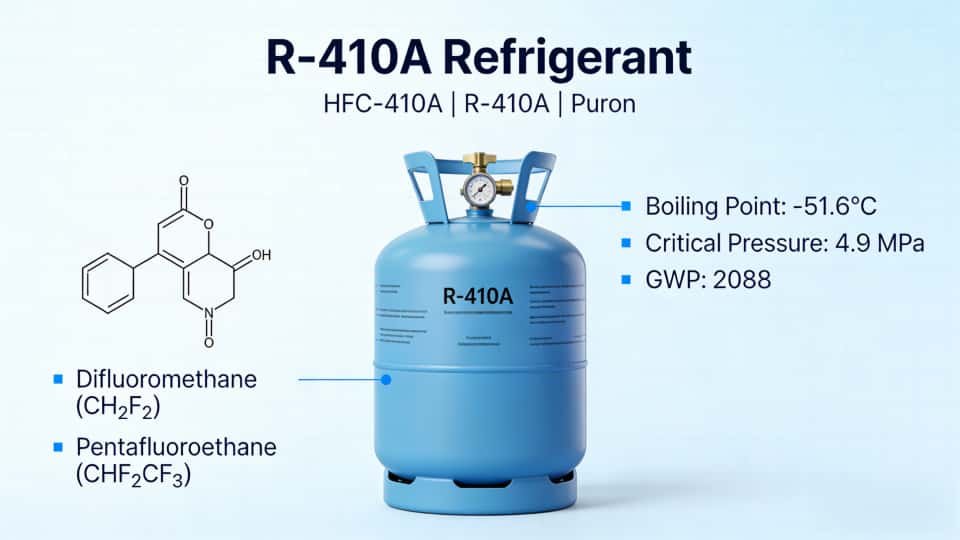
R-410A is a hydrofluorocarbon (HFC) refrigerant blend composed of R-32 (difluoromethane) and R-125 (pentafluoroethane), designed as a high-efficiency, ozone-safe replacement for R-22 in air conditioning systems. It operates at higher pressures, delivers better heat transfer performance, and is widely used in residential and commercial HVAC systems—but it also has a relatively high global warming potential (GWP), making it subject to increasing regulatory phase-down worldwide.
To fully understand R-410A, we need to go beyond its basic definition and analyze its chemistry, thermodynamic behavior, system compatibility, environmental profile, regulatory status, and future alternatives. This guide provides a complete, engineering-level perspective tailored for industrial buyers and technical professionals.
Chemical Composition and Molecular Structure of R-410A
R-410A is not a single compound but a zeotropic near-azeotropic blend of two hydrofluorocarbons:
- R-32 (CH₂F₂, difluoromethane)
- R-125 (C₂HF₅, pentafluoroethane)
The typical composition is:
- 50% R-32
- 50% R-125 (by mass)
Why This Blend Matters
Each component contributes specific properties:
- R-32
- High cooling capacity
- Good heat transfer
- Flammable on its own (A2L classification)
- R-125
- Non-flammable
- Stabilizes the mixture
- Reduces flammability risk
Together, they form a blend classified as A1 (non-flammable, low toxicity) under ASHRAE standards.
Table 1: Basic Chemical Properties
| Property | Value / Description |
|---|---|
| Refrigerant Name | R-410A |
| Type | HFC blend |
| Composition | R-32 / R-125 (50/50) |
| ODP (Ozone Depletion Potential) | 0 |
| GWP (Global Warming Potential) | ~2088 |
| Safety Class (ASHRAE) | A1 (non-flammable) |
Key Insight
R-410A was engineered to balance performance and safety, but not necessarily long-term environmental sustainability—this is why regulations are tightening.
Thermodynamic Properties and Performance Characteristics
R-410A is widely used because of its excellent thermodynamic performance, especially compared to older refrigerants like R-22.
Key Performance Features
- Higher operating pressure
- Improved heat transfer efficiency
- Better energy efficiency in properly designed systems
Table 2: Thermodynamic Comparison
| Parameter | R-22 | R-410A |
|---|---|---|
| Operating Pressure | Lower | Higher (~1.6x) |
| Cooling Capacity | Moderate | Higher |
| Energy Efficiency | Moderate | Higher |
| Compressor Design | Standard | Reinforced |
Practical Implications
- Systems using R-410A must be designed for higher pressure
- Existing R-22 systems cannot be directly retrofitted
- Smaller compressors can achieve similar or higher performance
Heat Transfer Advantages
- Higher volumetric cooling capacity
- Better heat exchange efficiency
- Faster system response
These properties explain why R-410A became the dominant refrigerant in new HVAC systems for over a decade.
System Compatibility and Engineering Considerations
R-410A is not just a drop-in replacement—it requires specific system design.
Key Compatibility Factors
- Lubricants: Requires POE (polyolester) oil
- Materials: Must withstand higher pressure
- Components: Valves, compressors, and heat exchangers must be optimized
Table 3: Compatibility Overview
| Component Type | Compatibility with R-410A |
|---|---|
| Mineral Oil | Not compatible |
| POE Oil | Required |
| R-22 Equipment | Not compatible |
| High-pressure components | Required |
Common Issues
- Moisture sensitivity (POE oils absorb water)
- Seal and elastomer compatibility
- Higher stress on system components
Engineering Best Practices
- Use dedicated R-410A systems
- Ensure proper evacuation and drying
- Avoid cross-contamination
Applications of R-410A Refrigerant
R-410A is primarily used in air conditioning and heat pump systems.
Main Application Areas
- Residential split air conditioners
- Commercial HVAC systems
- Heat pumps
- Rooftop units
Table 4: Application Breakdown
| Application Type | Usage Level |
|---|---|
| Residential AC | Very High |
| Commercial HVAC | High |
| Industrial Cooling | Moderate |
| Refrigeration Systems | Limited |
Why It Became Popular
- Replaced ozone-depleting R-22
- Offered higher efficiency
- Supported compact system design
Environmental Impact and Regulatory Pressure
Although R-410A solved the ozone depletion problem, it introduced a new challenge: high global warming potential (GWP).
Environmental Profile
- ODP = 0 (ozone-safe)
- GWP ≈ 2088 (high greenhouse impact)
Regulatory Trends
- Phase-down under Kigali Amendment (Montreal Protocol)
- Restrictions in EU (F-Gas Regulation)
- U.S. AIM Act reducing HFC usage
Table 5: Regulatory Pressure Overview
| Region | Regulation Type | Impact on R-410A |
|---|---|---|
| EU | F-Gas Regulation | Phase-down |
| USA | AIM Act | Gradual reduction |
| Global | Kigali Amendment | Long-term phase-down |
Key Insight
R-410A is not banned globally, but its future is limited due to climate policies.
Alternatives to R-410A: The Industry Transition
As regulations tighten, the HVAC industry is shifting toward lower-GWP refrigerants.
Main Alternatives
- R-32
- Lower GWP (~675)
- Higher efficiency
- Mildly flammable
- R-454B / R-452B
- Designed as direct replacements
- Lower GWP (~466–700)
Table 6: R-410A vs Alternatives
| Refrigerant | GWP | Flammability | Status |
|---|---|---|---|
| R-410A | 2088 | Non-flammable | Being phased down |
| R-32 | 675 | Mild (A2L) | Widely adopted |
| R-454B | ~466 | Mild (A2L) | Emerging replacement |
Trade-Off Considerations
- Safety vs environmental impact
- System redesign requirements
- Regulatory compliance
Handling, Storage, and Safety Considerations
R-410A is relatively safe but still requires proper handling.
Key Safety Points
- Stored as a liquefied gas under pressure
- Risk of frostbite on contact
- Requires proper ventilation
Storage Guidelines
- Keep cylinders upright
- Avoid high temperatures
- Use compatible valves and fittings
Table 7: Safety Overview
| Hazard Type | Risk Level |
|---|---|
| Toxicity | Low |
| Flammability | None (A1) |
| Pressure Risk | High |
| Environmental Risk | High (GWP) |
Conclusion: A High-Performance Refrigerant Facing Transition
R-410A has played a critical role in modern HVAC development, offering high efficiency, safety, and ozone protection. However, its high global warming potential means it is now part of a broader industry transition toward more sustainable refrigerants.
Understanding R-410A requires balancing:
- Performance advantages
- System requirements
- Environmental impact
- Regulatory trajectory
For buyers and engineers, the key is not just knowing what R-410A is—but knowing when to use it, when to replace it, and how to manage its lifecycle responsibly.
Let’s Plan Your Refrigerant Strategy the Right Way
At Sparrow Chemicals, we help global customers navigate refrigerant selection, regulatory compliance, and supply strategies—whether you are working with R-410A or transitioning to next-generation alternatives.
If you are sourcing refrigerants or evaluating alternatives, reach out here:
👉 https://sparrow-chemical.com/