Modern industries—from semiconductors to pharmaceuticals—are facing a critical challenge: finding materials that can withstand extreme environments, resist chemical degradation, and deliver consistent performance under harsh conditions. Traditional hydrocarbons often fail under high temperatures, corrosive chemicals, or oxidative stress. This limitation leads to equipment degradation, product instability, and costly downtime. Highly fluorinated chemicals emerge as a powerful solution, offering unmatched stability, chemical resistance, and performance reliability that conventional materials simply cannot achieve.
Highly fluorinated chemicals are organic or inorganic compounds in which a large proportion—or all—of the hydrogen atoms are replaced by fluorine atoms. This high fluorine content gives them exceptional properties such as extreme chemical stability, thermal resistance, hydrophobicity, oleophobicity, and low surface energy, making them essential in industries like electronics, aerospace, pharmaceuticals, and advanced coatings.
To fully understand their importance, it is essential to explore not only what these chemicals are, but also how their molecular structure drives their unique properties, how they are classified, where they are used, and how to select the right type for industrial applications.
Understanding the Molecular Foundation of Highly Fluorinated Chemicals
Highly fluorinated chemicals are fundamentally defined by the presence of multiple carbon–fluorine (C–F) bonds, one of the strongest bonds in organic chemistry. The bond dissociation energy of a C–F bond is approximately 485 kJ/mol, significantly higher than that of C–H or C–Cl bonds. This high bond strength is the primary reason behind their remarkable chemical inertness.
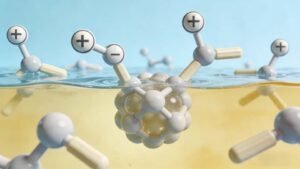
At the molecular level, fluorine atoms create a dense electron cloud around the carbon backbone. This electron shielding effect prevents reactive species such as acids, bases, and oxidizing agents from attacking the molecule. Additionally, fluorine’s high electronegativity induces strong polarity in the bond, but paradoxically results in low intermolecular interactions, giving rise to unique physical behaviors such as low surface tension.
Key structural characteristics include:
- High fluorine-to-carbon ratio (F/C ratio often > 1)
- Fully or partially fluorinated carbon chains
- Presence of functional groups like –CF₃, –C₂F₅, –SO₃⁻, –COOH
- Linear, branched, or cyclic fluorinated backbones
These structural features are the foundation for the performance advantages seen in industrial applications.
Classification of Highly Fluorinated Chemicals
Highly fluorinated chemicals can be broadly categorized based on their degree of fluorination, functional groups, and application domains.
Classification by Degree of Fluorination
| Category | Description | Example Compounds | Key Characteristics |
|---|---|---|---|
| Partially Fluorinated | Some hydrogen replaced by fluorine | Fluorobenzene | Moderate stability |
| Perfluorinated | All hydrogen replaced by fluorine | Perfluorooctanoic acid (PFOA) | Maximum stability |
| Polyfluorinated | Multiple fluorine atoms but not fully substituted | Fluorotelomers | Functional versatility |
Classification by Chemical Type
| Type | Description | Representative Chemicals | Industrial Role |
|---|---|---|---|
| Fluoropolymers | High molecular weight polymers | PTFE, PVDF | Coatings, insulation |
| Fluorosurfactants | Surface-active agents | PFOS, PFOA derivatives | Wetting, emulsification |
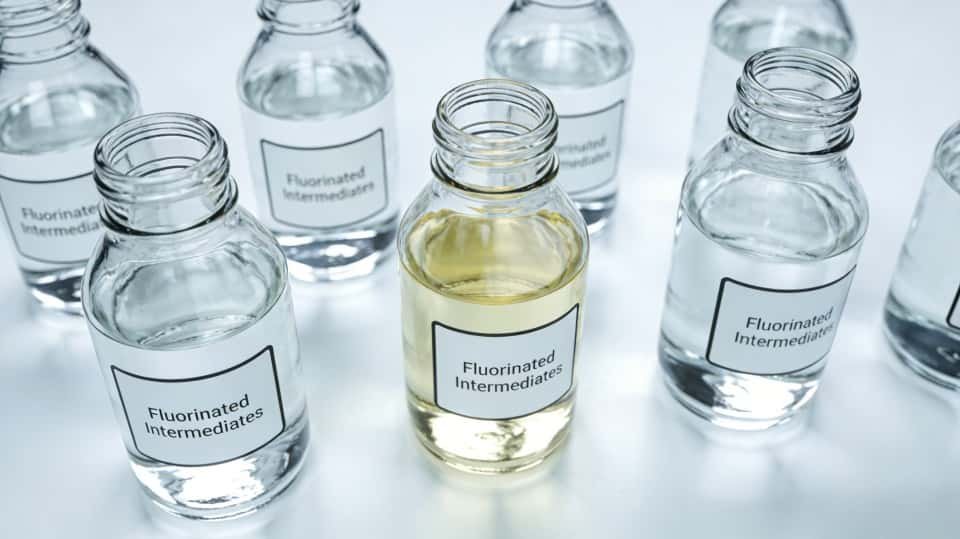
| Fluorinated Intermediates | Reactive building blocks | Fluorinated ketones, alcohols | Synthesis |
| Fluorinated Gases | Volatile compounds | SF₆, CF₄ | Electronics, insulation |
These classifications are essential for procurement decisions, as each category behaves differently in terms of reactivity, safety, and cost.
Key Physical and Chemical Properties
The unique properties of highly fluorinated chemicals stem directly from their molecular structure.
Core Properties Table
| Property | Typical Behavior | Industrial Impact |
|---|---|---|
| Thermal Stability | Up to 300–400°C or higher | Suitable for extreme environments |
| Chemical Resistance | Resistant to acids, bases, solvents | Long service life |
| Hydrophobicity | Strong water repellency | Anti-corrosion coatings |
| Oleophobicity | Oil resistance | Anti-fouling surfaces |
| Low Surface Energy | ~10–20 mN/m | Non-stick applications |
| Electrical Insulation | उत्कृष्ट dielectric properties | Electronics |
Performance Comparison with Hydrocarbon Materials
| Property | Hydrocarbon Compounds | Fluorinated Compounds |
|---|---|---|
| Bond Strength | Moderate | Very High |
| Reactivity | High | Extremely Low |
| Lifespan | Shorter | Much Longer |
| Environmental Persistence | Low–Moderate | High |
These properties explain why fluorinated materials are often used in mission-critical systems where failure is not an option.
Industrial Applications of Highly Fluorinated Chemicals
Highly fluorinated chemicals are deeply integrated into modern industrial ecosystems. Their applications span multiple high-value sectors.
Semiconductor Industry
- Plasma etching gases (e.g., CF₄, C₂F₆)
- Cleaning agents for wafer processing
- Dielectric materials
Pharmaceutical Industry
- Fluorinated drug intermediates
- Bioavailability enhancement
- Metabolic stability improvement
Aerospace and Defense
- High-performance lubricants
- Fuel additives
- Thermal-resistant coatings
Coatings and Surface Treatments
- Anti-corrosion coatings
- Hydrophobic glass treatments
- Non-stick cookware (PTFE)
Energy Sector
- Lithium battery electrolytes
- Insulating gases in power systems
Production Technologies and Manufacturing Considerations
The synthesis of highly fluorinated chemicals is complex and capital-intensive. Key production methods include:
Common Production Routes
| Method | Description | Advantages | Limitations |
|---|---|---|---|
| Electrochemical Fluorination (ECF) | Direct fluorination using HF | High yield | Expensive |
| Telomerization | Chain growth reactions | Controlled structure | Multi-step |
| Direct Fluorination | F₂ gas reaction | High purity | Hazardous |
| Halogen Exchange | Cl → F substitution | Scalable | Limited scope |
Manufacturers must carefully control reaction conditions due to the high reactivity of fluorine gas and the need for corrosion-resistant equipment.
Environmental and Regulatory Considerations
One of the most critical aspects of highly fluorinated chemicals is their environmental persistence. Many belong to the PFAS (Per- and Polyfluoroalkyl Substances) family, often referred to as “forever chemicals.”
Key Concerns
- Bioaccumulation in living organisms
- Resistance to natural degradation
- Potential toxicity
Regulatory Landscape
| Region | Regulation | Focus |
|---|---|---|
| USA | EPA PFAS Action Plan | Restriction & monitoring |
| EU | REACH | Phase-out initiatives |
| Global | Stockholm Convention | Persistent pollutants |
Industries must balance performance benefits with environmental responsibilities, often seeking alternative chemistries or low-impact formulations.
How to Select the Right Highly Fluorinated Chemical
Choosing the right fluorinated chemical requires a multi-factor evaluation:
Selection Criteria
- Application environment (temperature, chemicals)
- Required surface properties
- Regulatory compliance
- Cost-performance balance
- Supply chain reliability
Example Selection Matrix
| Application | Recommended Type | Key Reason |
|---|---|---|
| Semiconductor Etching | Fluorinated gases | Precision |
| Anti-Corrosion Coating | Fluoropolymers | Durability |
| Surfactants | Fluorosurfactants | Surface activity |
| Pharma Intermediates | Fluorinated organics | Reactivity control |
Market Trends and Future Outlook
The demand for highly fluorinated chemicals continues to grow, driven by:
- Expansion of semiconductor manufacturing
- Growth in electric vehicles and batteries
- Increasing demand for high-performance materials
However, the industry is also shifting toward:
- Short-chain PFAS alternatives
- Fluorine-free innovations
- Green chemistry approaches
This dual trend creates both challenges and opportunities for manufacturers and buyers.
Final Thoughts
Highly fluorinated chemicals represent one of the most advanced classes of materials in modern chemistry. Their unmatched stability, resistance, and performance make them indispensable across multiple industries. However, their environmental impact and regulatory scrutiny require careful consideration, responsible sourcing, and strategic selection.
Let’s Talk About Your Fluorochemical Needs
If you’re sourcing highly fluorinated chemicals or exploring alternatives for your applications, it’s worth having a technical discussion with experts who understand both performance and compliance.
At Sparrow Chemicals, we work closely with global customers to provide reliable fluorochemical solutions—from intermediates to specialty formulations—tailored to real industrial challenges.
Explore more or get in touch: https://sparrow-chemical.com/