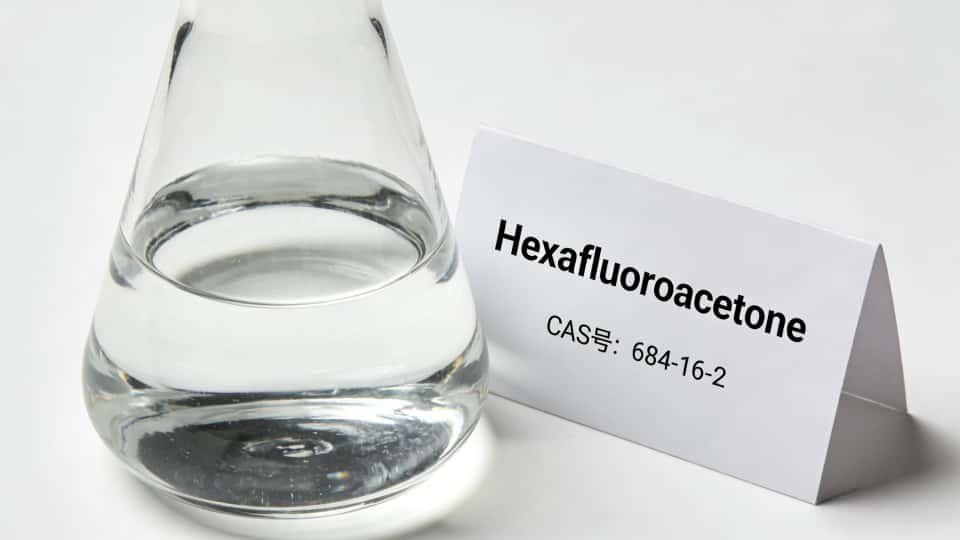
Acetone is one of the most common organic solvents in the world—cheap, volatile, and relatively stable. Hexafluoroacetone, however, behaves entirely differently despite sharing the same carbonyl backbone. Engineers, chemists, and purchasing managers sometimes assume hexafluoroacetone is simply a “fluorinated acetone.” That misunderstanding can lead to serious design errors in synthesis, material compatibility, storage, and safety planning. The structural similarity hides profound electronic, thermodynamic, and reactivity differences. Understanding these differences is critical for industrial process design, fluoropolymer production, specialty chemical synthesis, and semiconductor material development.
Hexafluoroacetone (HFA) differs from acetone primarily because its six fluorine atoms (CF₃ groups) dramatically increase electrophilicity, acidity, reactivity, and hydrate formation tendency. While acetone is a stable, moderately polar solvent, hexafluoroacetone is a highly reactive fluorinated ketone with strong electron-withdrawing effects, lower nucleophilicity, higher electrophilicity at the carbonyl carbon, and significantly different industrial applications—particularly in fluoropolymer and specialty fluorochemical synthesis.
To understand this distinction properly, we must analyze molecular structure, electronic effects, physical properties, chemical reactivity, thermodynamic behavior, industrial applications, and safety considerations in detail.
Molecular Structure Comparison
Both molecules share a carbonyl functional group (C=O). However, the substitution pattern around the carbonyl carbon is fundamentally different.
Structural Formulas
| Compound | Chemical Formula | Structural Representation |
|---|---|---|
| Acetone | C₃H₆O | (CH₃)₂CO |
| Hexafluoroacetone | C₃F₆O | (CF₃)₂CO |
The replacement of hydrogen atoms with fluorine atoms changes:
• Electron distribution
• Dipole moment
• Molecular orbital energy levels
• Reactivity pattern
Fluorine is the most electronegative element (Pauling scale: 3.98). Its strong inductive (-I) effect pulls electron density away from the carbonyl carbon, dramatically increasing electrophilicity.
Electronic Effects and Carbonyl Reactivity
In acetone, the methyl groups donate electron density via hyperconjugation, slightly stabilizing the carbonyl carbon.
In hexafluoroacetone:
• CF₃ groups strongly withdraw electrons
• Carbonyl carbon becomes highly electron-deficient
• Increased susceptibility to nucleophilic attack
• Enhanced Lewis acidity
Electrophilicity Comparison
| Property | Acetone | Hexafluoroacetone |
|---|---|---|
| Carbonyl Electrophilicity | Moderate | Very High |
| Susceptibility to Nucleophilic Addition | Standard | Extremely Fast |
| Hydrate Formation | Weak | Strong |
Hexafluoroacetone readily forms hydrates in the presence of water due to enhanced carbonyl polarization.
Physical Property Differences
| Property | Acetone | Hexafluoroacetone |
|---|---|---|
| Molecular Weight | 58.08 g/mol | 166.02 g/mol |
| Boiling Point | 56°C | ~−27°C (gas at room temperature under certain conditions) |
| Polarity | Polar aprotic | Highly polar fluorinated |
| Odor | Mild solvent smell | Pungent, reactive gas-like |
| Stability | Stable solvent | Reactive intermediate |
Acetone is a liquid at room temperature. Hexafluoroacetone can exist as a gas or volatile liquid depending on storage conditions.
Thermodynamic Behavior and Hydration
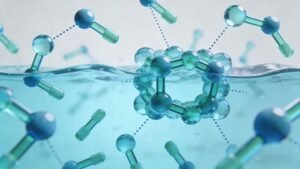
Hexafluoroacetone has a high tendency to form a gem-diol hydrate:
(CF₃)₂CO + H₂O ⇌ (CF₃)₂C(OH)₂
This equilibrium strongly favors the hydrate compared to acetone.
Why?
• Electron-withdrawing CF₃ groups increase carbonyl polarization
• Stabilization of hydrate via hydrogen bonding
• Lower activation barrier for nucleophilic water addition
Acetone forms hydrates only weakly and reversibly; hexafluoroacetone forms stable hydrates under standard conditions.
Acidic and Basic Behavior
Acetone α-hydrogens are mildly acidic (pKa ≈ 19–20).
Hexafluoroacetone has no α-hydrogens because methyl groups are replaced by CF₃ groups.
Consequences:
• No enolate formation
• Different reaction pathways
• Absence of classic aldol chemistry
This alone makes hexafluoroacetone chemically distinct from acetone.
Solvent Behavior vs Reactive Intermediate
Acetone:
• Widely used as industrial solvent
• Miscible with water
• Used in coatings, pharmaceuticals, cleaning
Hexafluoroacetone:
• Rarely used as general solvent
• Primarily used as chemical intermediate
• Key building block in fluoropolymers and specialty fluorochemicals
Industrial Applications
Acetone Applications
| Industry | Use |
|---|---|
| Coatings | Solvent |
| Pharma | Intermediate |
| Plastics | Cleaning |
| Consumer Products | Nail polish remover |
Hexafluoroacetone Applications
| Industry | Use |
|---|---|
| Fluoropolymer Production | Intermediate for FEP & PFA |
| Agrochemicals | Fluorinated intermediates |
| Electronics | Specialty fluorinated materials |
| Specialty Chemicals | Synthesis of fluorinated alcohols |
Hexafluoroacetone plays a key role in high-performance fluorochemical manufacturing.
Reactivity Profile Comparison
| Reaction Type | Acetone | Hexafluoroacetone |
|---|---|---|
| Aldol Condensation | Yes | No |
| Nucleophilic Addition | Moderate | Rapid |
| Hydrate Formation | Weak | Strong |
| Enolate Chemistry | Yes | No |
| Fluorinated Derivative Formation | No | Core building block |
The CF₃ substitution fundamentally changes reaction pathways.
Safety and Handling Differences
Acetone:
• Flammable liquid
• Low toxicity
• Easy storage
Hexafluoroacetone:
• Highly reactive
• Requires moisture control
• Corrosive in certain conditions
• Specialized containment
Proper fluorochemical handling protocols are mandatory.
Molecular Orbital Perspective
From a frontier molecular orbital (FMO) standpoint:
• Acetone LUMO energy: moderate
• Hexafluoroacetone LUMO energy: lower
Lower LUMO = greater electrophilicity.
Fluorination lowers orbital energy due to inductive electron withdrawal.
Economic and Strategic Differences
Acetone:
• Commodity chemical
• Mass production
• Low cost
Hexafluoroacetone:
• Specialty fluorochemical
• Controlled production
• Higher price
• Strategic importance in advanced materials
Comprehensive Summary Table
| Category | Acetone | Hexafluoroacetone |
|---|---|---|
| Formula | (CH₃)₂CO | (CF₃)₂CO |
| Reactivity | Moderate | Highly reactive |
| Hydrate Formation | Weak | Strong |
| Solvent Role | Primary solvent | Rare |
| Industrial Role | Commodity | Specialty intermediate |
| Electrophilicity | Moderate | Very high |
| Enolate Formation | Yes | No |
| Cost | Low | High |
| Storage | Simple | Controlled |
Why Fluorination Changes Everything
Fluorine substitution:
• Increases electronegativity
• Enhances carbonyl polarization
• Eliminates α-hydrogen chemistry
• Raises chemical stability of CF bonds
• Alters molecular dipole moment
This is not a minor modification—it is a fundamental chemical transformation.
Practical Engineering Implications
If you substitute acetone with hexafluoroacetone in a synthesis:
• Reaction rate will change dramatically
• Mechanism may shift entirely
• Moisture sensitivity becomes critical
• Materials compatibility must be re-evaluated
• Process safety risk increases
Failure to understand this difference may lead to runaway reactions or failed synthesis.
Conclusion
Hexafluoroacetone is not a stronger version of acetone—it is a chemically distinct fluorinated ketone with radically different electronic structure, reactivity, thermodynamic behavior, industrial purpose, and safety requirements. Acetone is a stable solvent and commodity chemical; hexafluoroacetone is a highly electrophilic, fluorinated specialty intermediate used in advanced fluorochemical synthesis.
Understanding these distinctions is essential for R&D chemists, procurement managers, and process engineers working in high-performance materials and fluorinated chemistry sectors.
Ready to Source High-Purity Hexafluoroacetone?
At Sparrow-Chemical, we specialize in high-purity fluorochemical intermediates, including hexafluoroacetone and related specialty fluorinated compounds for polymer, agrochemical, and advanced material industries. Our technical team supports specification matching, compliance documentation, and global logistics.
If your process depends on precision fluorine chemistry, we are ready to support your next project with reliable supply and expert guidance.