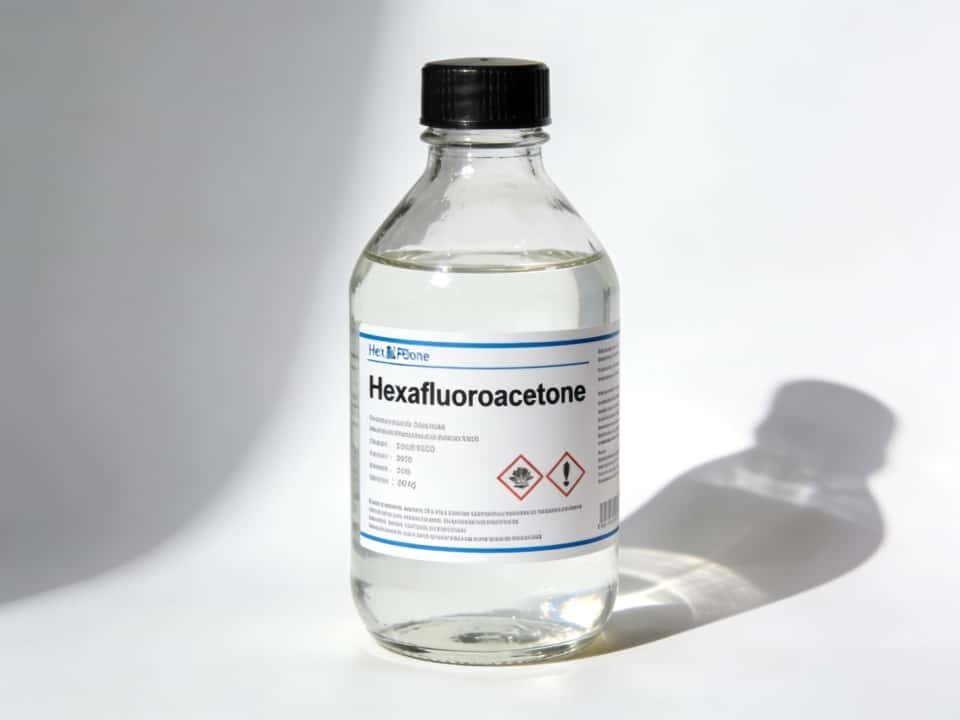
Hexafluoroacetone (HFA) is widely used in advanced fluorochemical synthesis, semiconductor-grade intermediates, and high-performance polymer production. However, because it is a highly reactive, fluorinated carbonyl compound, many manufacturers, laboratory operators, and procurement managers ask a critical question before integrating it into operations: Is Hexafluoroacetone hazardous? Ignoring the hazard profile of reactive fluorinated ketones can result in exposure risks, moisture-triggered reactions, equipment corrosion, and severe workplace incidents. On the other hand, overestimating the danger without technical context can unnecessarily restrict its industrial use. The correct answer lies in understanding its toxicology, reactivity, regulatory classification, exposure routes, and industrial safety controls.
Yes, Hexafluoroacetone is hazardous. It is a highly reactive, corrosive, and toxic fluorinated ketone that can cause severe respiratory irritation, chemical burns upon contact with moisture, and systemic toxicity if inhaled. However, when handled under controlled industrial conditions with proper engineering controls, PPE, and dry inert systems, it can be used safely in professional chemical and materials manufacturing environments.
To make informed decisions, we must examine the hazard profile through chemical reactivity, toxicological mechanisms, exposure pathways, industrial risk mitigation, environmental considerations, and regulatory classification.
1. Chemical Reactivity: Why HFA Presents Intrinsic Hazard
Hexafluoroacetone (CF₃–CO–CF₃) is one of the most electrophilic ketones known in fluorine chemistry.
Structural Hazard Drivers
| Structural Feature | Hazard Contribution |
|---|---|
| Strong electron-withdrawing CF₃ groups | Increases carbonyl reactivity |
| High electrophilicity | Reacts violently with nucleophiles |
| Hydrate formation tendency | Reacts with water and moisture |
| Volatility | Facilitates inhalation exposure |
Moisture Reaction
HFA reacts rapidly with water to form a geminal diol hydrate. While this reaction is not explosive, it can:
• Release heat
• Produce corrosive byproducts
• Create acidic environments
• Cause respiratory irritation if inhaled as vapor
This high reactivity classifies HFA as a reactive hazardous chemical.
2. Acute Toxicity Profile
The primary exposure route of concern is inhalation.
Exposure Effects
| Exposure Route | Potential Effects |
|---|---|
| Inhalation | Severe respiratory irritation, pulmonary edema |
| Skin Contact | Chemical burns (especially in presence of moisture) |
| Eye Contact | Severe irritation or corneal injury |
| Ingestion | Corrosive injury to gastrointestinal tract |
Because HFA vapor is highly irritating, accidental inhalation may cause:
• Coughing
• Chest tightness
• Shortness of breath
• Delayed lung injury
Animal toxicology data classify HFA as toxic via inhalation.
3. Corrosivity and Moisture Sensitivity
Hexafluoroacetone is not strongly acidic by itself, but when exposed to moisture:
• It forms hydrates
• It may generate acidic conditions
• It can corrode sensitive metals
Material Compatibility Table
| Material | Compatibility with HFA |
|---|---|
| Carbon Steel | Poor |
| Aluminum | Poor |
| Stainless Steel (passivated) | Good |
| PTFE | Excellent |
| Glass | Generally compatible |
Industrial systems must therefore use:
• Dry stainless steel systems
• PTFE seals
• Moisture-free gas transfer
Improper material selection significantly increases hazard risk.
4. Occupational Exposure and Industrial Controls
Because HFA is volatile and reactive, strict engineering controls are mandatory.
Industrial Safety Requirements
• Closed transfer systems
• Inert gas blanketing (nitrogen)
• Moisture-free handling
• Explosion-proof ventilation
• Gas detection systems
• Emergency scrubbers
Personal Protective Equipment (PPE)
| PPE Type | Requirement |
|---|---|
| Respiratory Protection | Supplied-air respirator if exposure risk |
| Gloves | Fluoropolymer-compatible gloves |
| Eye Protection | Chemical splash goggles |
| Body Protection | Acid-resistant protective clothing |
Under well-designed industrial systems, exposure is minimized.
5. Regulatory Classification
Hexafluoroacetone is classified under various global chemical regulations.
Hazard Classification Overview
| Regulatory Framework | Classification Summary |
|---|---|
| GHS | Toxic, corrosive, respiratory irritant |
| OSHA | Hazardous chemical |
| REACH (EU) | Registered hazardous substance |
| Transport | Classified as hazardous gas (pressure dependent) |
Proper labeling typically includes:
• Toxicity warnings
• Corrosive hazard
• Compressed gas symbol (if applicable)
Compliance is mandatory for international shipment.
6. Environmental Hazard Considerations
HFA is not widely persistent like some PFAS compounds, but environmental release must be controlled.
Environmental Risk Factors
• Volatile release to atmosphere
• Hydrolysis in moisture
• Potential breakdown products
Compared to perfluorinated hydrocarbons (e.g., CF₄), HFA is:
• More reactive
• Less environmentally persistent
• Not typically bioaccumulative
However, uncontrolled emissions are strictly regulated.
7. Fire and Explosion Hazard
Hexafluoroacetone is not highly flammable in typical conditions, but:
• It can decompose under high heat
• Decomposition may produce toxic fluorinated gases
• Pressure build-up may occur in sealed containers
Thermal Hazard Table
| Condition | Risk |
|---|---|
| High heat (>200°C) | Decomposition |
| Confined heating | Pressure increase |
| Reaction with strong nucleophiles | Exothermic reaction |
Fire scenarios require specialized firefighting procedures due to potential HF formation.
8. Comparison with Other Fluorinated Chemicals
| Chemical | Acute Toxicity | Reactivity | Persistence |
|---|---|---|---|
| CF₄ | Low | Low | Very persistent |
| C₂F₆ | Low | Low | Very persistent |
| HF (Hydrofluoric acid) | Extremely high | High | Not persistent |
| HFA | High (inhalation) | Very high | Moderate |
HFA’s hazard profile is more related to reactivity than environmental persistence.
9. Industrial Incident Prevention Strategy
Safe operation requires layered protection:
Engineering Controls
• Automated dosing systems
• Moisture sensors
• Pressure relief valves
• Secondary containment
Administrative Controls
• Operator training
• Standard operating procedures (SOPs)
• Emergency response drills
• Regular equipment inspection
Emergency Response
If accidental exposure occurs:
• Evacuate area
• Provide fresh air
• Seek medical attention immediately
• Use neutralizing scrubber systems
10. Risk vs. Utility Assessment
Despite its hazards, HFA remains valuable in:
• Aerospace polymer synthesis
• Semiconductor materials
• High-performance elastomers
• Fluorinated monomer production
The reason is simple: there are few alternatives that provide the same combination of:
• Strong electrophilicity
• High fluorine content
• Thermal stability
• Chemical resistance enhancement
In industrial chemistry, hazardous materials are often indispensable—but only when managed properly.
11. Storage and Transportation Best Practices
Storage Guidelines
• Store in dry, cool, ventilated areas
• Use moisture-free sealed containers
• Avoid incompatible materials
• Monitor cylinder integrity
Transport Considerations
| Factor | Requirement |
|---|---|
| Packaging | Approved pressure-rated cylinders |
| Labeling | Full GHS hazard labels |
| Documentation | SDS required |
| International Shipping | UN classification compliance |
Proper supply chain management reduces accident risk significantly.
Conclusion
Hexafluoroacetone is unquestionably hazardous. It is toxic by inhalation, highly reactive toward moisture, and corrosive under certain conditions. However, it is not uniquely dangerous compared to many other industrial fluorinated intermediates. When handled in professional chemical manufacturing environments using closed systems, moisture control, appropriate materials, PPE, and regulatory compliance, it can be managed safely and effectively.
The key distinction is this: Hexafluoroacetone is hazardous in uncontrolled environments—but controllable in engineered industrial systems. Like many high-performance chemical intermediates, its benefits justify its use when strict safety frameworks are in place.
Need Reliable, Safely Managed Hexafluoroacetone Supply?
If you are sourcing Hexafluoroacetone for fluoropolymer synthesis, electronic materials, or advanced chemical applications, safety and purity must go hand in hand.
At Sparrow-Chemical, we provide high-purity Hexafluoroacetone produced and packaged under strict industrial safety protocols, with complete documentation, regulatory compliance support, and technical guidance for safe implementation.
Visit us at:
👉 https://sparrow-chemical.com/
Let’s work together—responsibly and professionally—to ensure both performance and safety in your fluorochemical operations.