Hexafluoroacetone is often described as “unstable,” but that description is incomplete and, in many cases, misleading. In fluorochemistry, stability is never a single concept. It depends on whether one is referring to thermal stability, chemical stability, storage stability, or kinetic stability in reactive environments. Misunderstanding this distinction can lead to improper storage, unsafe handling, or incorrect assumptions about shelf life and process reliability.
Hexafluoroacetone is thermally and chemically stable under dry, controlled conditions, but it is highly reactive and moisture-sensitive; its apparent instability arises from extreme electrophilicity rather than inherent decomposition.
Stability depends on what “stable” means
In industrial chemistry, stability must be evaluated along several independent axes. A compound may be thermally stable but chemically reactive, or chemically inert but physically difficult to contain. Hexafluoroacetone falls squarely into this category of conditionally stable substances.
When handled in dry, inert, closed systems, hexafluoroacetone does not undergo spontaneous breakdown. However, when exposed to nucleophiles, especially water, it reacts readily. This distinction is critical.
Thermal stability: intrinsically robust
From a purely thermal perspective, hexafluoroacetone is intrinsically stable. The carbon–fluorine bond is among the strongest single bonds in organic chemistry, and the molecule does not undergo homolytic decomposition at moderate temperatures.
Under controlled, dry conditions:
- No spontaneous thermal degradation occurs
- No self-polymerization is observed
- The molecule remains chemically intact
Thermal instability is therefore not the limiting factor in its use.
Chemical stability: highly environment-dependent
Chemically, hexafluoroacetone is stable only in the absence of nucleophiles. Its carbonyl carbon is extremely electrophilic due to the presence of two CF₃ groups, making it highly susceptible to addition reactions.
In dry, aprotic environments, the molecule remains unchanged. In contrast:
- Trace moisture leads to hydrate formation
- Alcohols, amines, or bases trigger rapid reactions
- Impurities can dramatically alter behavior
Thus, hexafluoroacetone is best described as chemically stable but highly reactive, a distinction that is often misunderstood.
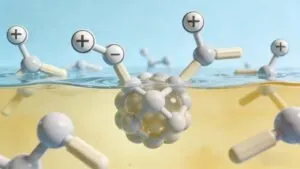
Hydration and apparent instability
One of the most common reasons hexafluoroacetone is labeled “unstable” is its tendency to form a hydrate. This is not decomposition. The hydrate formation is a reversible equilibrium process, strongly favored due to CF₃-induced electrophilicity.
Key points:
- Hydration changes physical and spectroscopic properties
- The carbonyl is not destroyed; it is temporarily masked
- Removing water restores the carbonyl form
From a chemical standpoint, this is controlled reactivity, not instability.
Storage stability under industrial conditions
When stored correctly, hexafluoroacetone has acceptable storage stability for industrial use. This requires:
- Dry, moisture-free systems
- Inert atmosphere or sealed containers
- Temperature control to manage vapor pressure
Under these conditions, degradation is not the primary concern. Pressure management and containment are more critical than chemical breakdown.
Physical stability and containment challenges
Hexafluoroacetone’s low boiling point and high vapor pressure can create the impression of instability. In reality, these are physical handling challenges, not chemical decay.
High volatility leads to:
- Rapid vaporization if containment fails
- Pressure buildup in sealed vessels
- Losses through evaporation rather than decomposition
Thus, physical stability depends on engineering controls rather than molecular fragility.
Stability in reactive systems
In reaction environments, hexafluoroacetone is intentionally unstable in the sense that it is meant to react. Its strong electrophilicity is the very reason it is used as an intermediate.
In well-designed processes:
- Reactivity is predictable and controllable
- Conversion is high and selective
- No uncontrolled degradation occurs
Problems arise only when the reaction environment is not properly defined or controlled.
Comparison with other fluorinated ketones
| Compound | Thermal stability | Moisture sensitivity | Overall stability profile |
|---|---|---|---|
| Acetone | High | Low | Broadly stable |
| Trifluoroacetone | High | Moderate | Conditionally stable |
| Hexafluoroacetone | High | Very high | Highly condition-dependent |
This comparison shows that increased fluorination does not reduce thermal stability—it increases sensitivity to nucleophilic environments.
Why hexafluoroacetone is still used despite sensitivity
Despite its demanding handling requirements, hexafluoroacetone remains widely used because:
- Its structure is intrinsically robust
- Its reactivity is precise and predictable
- Alternatives cannot replicate its performance
In other words, it is selectively unstable by design, not fragile.
Final summary
Hexafluoroacetone is thermally stable and does not decompose spontaneously, but it is highly reactive and moisture-sensitive due to extreme electrophilicity. Its perceived instability arises from rapid, reversible reactions with nucleophiles—especially water—rather than from inherent chemical breakdown.
When handled in dry, controlled systems, hexafluoroacetone is sufficiently stable for industrial synthesis and long-term use. Its stability profile is therefore best described as conditionally stable and highly reactive, not unstable.
A practical note from industry experience
In real fluorochemical operations, issues attributed to “instability” are almost always traceable to moisture ingress or improper containment. Facilities that design around these realities use hexafluoroacetone safely and reliably; those that do not encounter avoidable variability.
Talk to Sparrow-Chemical about fluorochemical intermediates
If you are evaluating the stability, storage, or process integration of hexafluoroacetone, Sparrow-Chemical provides application-focused technical guidance and reliable global supply. We help customers manage highly reactive fluorochemical intermediates with precision and confidence. Visit https://sparrow-chemical.com/ to discuss your application with our technical team.