In fluorochemical and fine chemical sourcing, many buyers encounter the term fluoroaniline without fully understanding what it represents or why it is so widely used. This lack of clarity often leads to incorrect material selection, difficulty communicating with R&D teams, or confusion between isomers, purity grades, and end-use suitability. In regulated industries such as pharmaceuticals, agrochemicals, and advanced materials, misunderstanding a basic intermediate like fluoroaniline can result in formulation errors, regulatory delays, or avoidable cost increases. The solution is a precise, application-oriented understanding of what fluoroaniline is, how it is classified, and why it matters industrially.
Fluoroaniline is a class of fluorinated aromatic amines in which a fluorine atom substitutes one hydrogen on the benzene ring of aniline, producing highly valuable chemical intermediates used in pharmaceuticals, agrochemicals, dyes, polymers, and specialty fine chemicals.
To fully grasp its importance, it is necessary to examine fluoroaniline from structural, chemical, and industrial perspectives rather than treating it as a single generic compound.
Chemical Definition and Molecular Structure of Fluoroaniline
Fluoroaniline is an aromatic amine derived from aniline (C₆H₅NH₂) in which one hydrogen atom on the benzene ring is replaced by a fluorine atom. This substitution may appear minor, but it fundamentally alters the electronic properties of the molecule. The fluorine atom is highly electronegative and forms a strong carbon–fluorine bond, which affects reactivity, stability, and interaction with biological or polymeric systems.
Chemically, fluoroaniline retains the reactive amino group (–NH₂), which allows it to participate in a wide range of synthetic transformations, including acylation, alkylation, diazotization, and heterocycle formation. At the same time, the fluorine atom modifies electron density across the aromatic ring, enabling fine control over downstream molecular behavior.
From an industrial chemistry standpoint, this combination makes fluoroaniline a highly versatile and tunable building block rather than a commodity amine.
Fluoroaniline Isomers and Their Classification
Fluoroaniline is not a single compound but a family of positional isomers, classified according to the relative position of the fluorine atom to the amino group on the benzene ring.
| Isomer | Common Name | Structural Position | Typical Industrial Use |
|---|---|---|---|
| 2-Fluoroaniline | o-Fluoroaniline | Ortho | Agrochemicals, intermediates |
| 3-Fluoroaniline | m-Fluoroaniline | Meta | Dyes, fine chemicals |
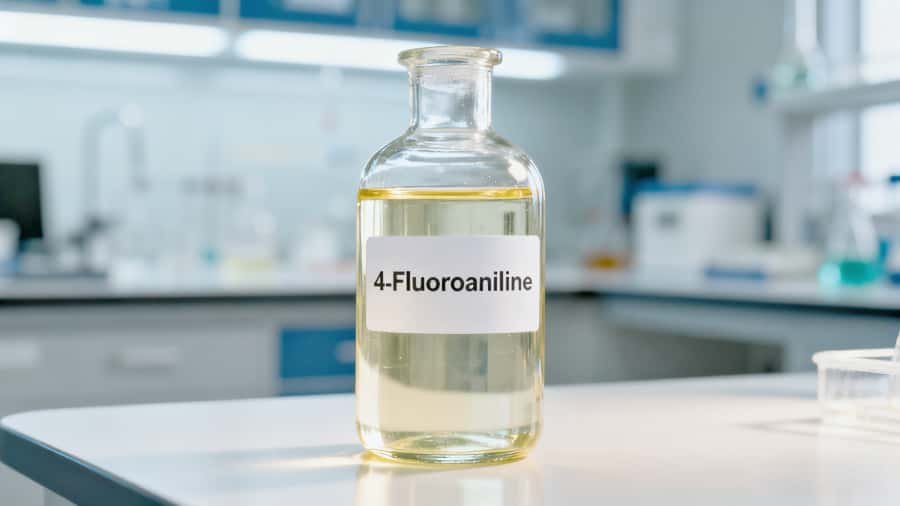
| 4-Fluoroaniline | p-Fluoroaniline | Para | Pharmaceuticals, polymers |
Among these, 4-fluoroaniline is the most widely used due to its balanced reactivity, cleaner reaction pathways, and superior performance in many downstream applications. However, each isomer has distinct steric and electronic characteristics, which directly influence synthesis outcomes.
Key Physical and Chemical Properties
The industrial relevance of fluoroaniline is closely tied to its physical and chemical properties. While exact values vary by isomer, several general characteristics apply across the category.
| Property | Typical Range | Industrial Significance |
|---|---|---|
| Molecular weight | ~111 g/mol | Predictable stoichiometry |
| State | Liquid or low-melting solid | Easy handling |
| Solubility | Organic solvents | Process compatibility |
| Functional groups | –NH₂ and –F | Dual reactivity and stability |
The carbon–fluorine bond contributes to higher thermal and chemical stability compared with non-fluorinated anilines, which is one of the main reasons fluoroaniline derivatives are preferred in high-performance applications.
Why Fluoroaniline Is Important in Industrial Chemistry
Fluoroaniline plays a strategic role in modern chemical manufacturing because fluorine substitution is one of the most powerful tools available to chemists for performance tuning. Adding fluorine can improve metabolic stability, chemical resistance, lipophilicity, and selectivity without significantly increasing molecular size.
As a result, fluoroaniline is widely used as a key intermediate rather than an end product. Its value lies in what it becomes after further synthesis.
Major Industrial Applications of Fluoroaniline
Pharmaceutical Intermediates
In pharmaceuticals, fluoroaniline is frequently used to construct active pharmaceutical ingredients (APIs) and API intermediates. Fluorine can slow metabolic degradation, improve receptor binding, and enhance oral bioavailability. The amino group allows efficient incorporation into complex molecular frameworks, making fluoroaniline a staple in medicinal chemistry pipelines.
Agrochemicals and Crop Protection
Fluoroaniline derivatives are widely used in herbicides, fungicides, and insecticides. Fluorine improves environmental stability and biological potency, enabling lower application rates and more targeted activity. This makes fluoroaniline particularly valuable in modern, high-efficiency agrochemical formulations.
Dyes and Pigments
In dye chemistry, fluoroaniline serves as a precursor for azo dyes and specialty pigments. The presence of fluorine improves color fastness, UV resistance, and chemical durability, especially in textiles, plastics, and industrial coatings.
Polymers and Advanced Materials
Fluoroaniline is also used in the synthesis of specialty polymers, resins, and functional materials. Fluorinated aromatic units contribute to thermal stability, solvent resistance, and long service life in demanding environments such as electronics, automotive components, and industrial coatings.
Comparison with Non-Fluorinated Aniline
From a performance perspective, fluoroaniline offers clear advantages over standard aniline.
| Parameter | Aniline | Fluoroaniline |
|---|---|---|
| Chemical stability | Moderate | Higher |
| Performance tuning | Limited | Precise |
| High-value applications | Fewer | Extensive |
| Regulatory scrutiny | Lower | Higher but manageable |
While fluoroaniline requires more careful handling and documentation, its performance benefits justify its widespread adoption in advanced chemical sectors.
Safety and Regulatory Considerations
Fluoroaniline compounds are classified as hazardous aromatic amines and must be handled with appropriate safety controls. Industrial users should follow strict guidelines regarding personal protective equipment, ventilation, and waste management. Regulatory compliance, including SDS availability and regional chemical registration, is essential for legal and safe use.
Conclusion
Fluoroaniline is a foundational fluorinated aromatic amine that plays a critical role in pharmaceuticals, agrochemicals, dyes, polymers, and specialty chemicals. Its importance stems from the unique combination of aniline reactivity and fluorine-driven performance enhancement. For manufacturers, formulators, and procurement professionals, understanding fluoroaniline is essential for making informed decisions in high-value chemical supply chains.
Work with Sparrow-Chemical for Fluoroaniline Solutions
If you are sourcing fluoroaniline or specific isomers for pharmaceutical, agrochemical, or specialty chemical applications, Sparrow-Chemical provides reliable supply, technical support, and application-focused service.
Contact Sparrow-Chemical today at https://sparrow-chemical.com/ to discuss specifications, volumes, and long-term cooperation.