Fluorosurfactants are one of the most powerful but misunderstood classes of chemical additives used across paints, coatings, adhesives, polymers, fire-fighting foams, electronics, and more. Many formulators suffer from persistent issues—poor wetting, uneven coating thickness, surface defects, foam instability, or lack of chemical resistance—without realizing that the root cause often lies in using conventional hydrocarbon surfactants where fluorosurfactants are technically required. When these issues remain unresolved, production costs rise, coating failure rates increase, and product performance becomes unpredictable. The good news is that understanding fluorosurfactants—even at a basic level—gives manufacturers and R&D chemists a powerful tool to radically improve performance. This article presents a full expert-level explanation of what fluorosurfactants are, how they work, and how to choose them properly.
Fluorosurfactants are high-performance surface-active agents whose hydrophobic tail contains fluorinated carbon chains (C–F bonds), giving them extremely low surface energy, exceptional chemical and thermal stability, and superior wetting/spreading abilities even at very low dosages. They outperform traditional surfactants in harsh industrial environments and are widely used in coatings, inks, adhesives, oils, and specialty chemical processes.
Understanding their structure and function will help you see why fluorosurfactants are often the “invisible ingredient” that elevates a formulation from acceptable to exceptional. Keep reading to see how they work in real industrial applications, how to select the right types, and what performance benefits you can expect.
Understanding Fluorosurfactants: Structure, Mechanism & Industrial Value
Fluorosurfactants sit at the intersection of organic chemistry and high-performance materials science. Their power comes from the carbon–fluorine bond—the strongest in organic chemistry—which imparts chemical inertness, hydrophobicity, oleophobicity, and incredibly low surface energy. Below is a detailed look at what defines them.
1. Molecular Structure of Fluorosurfactants
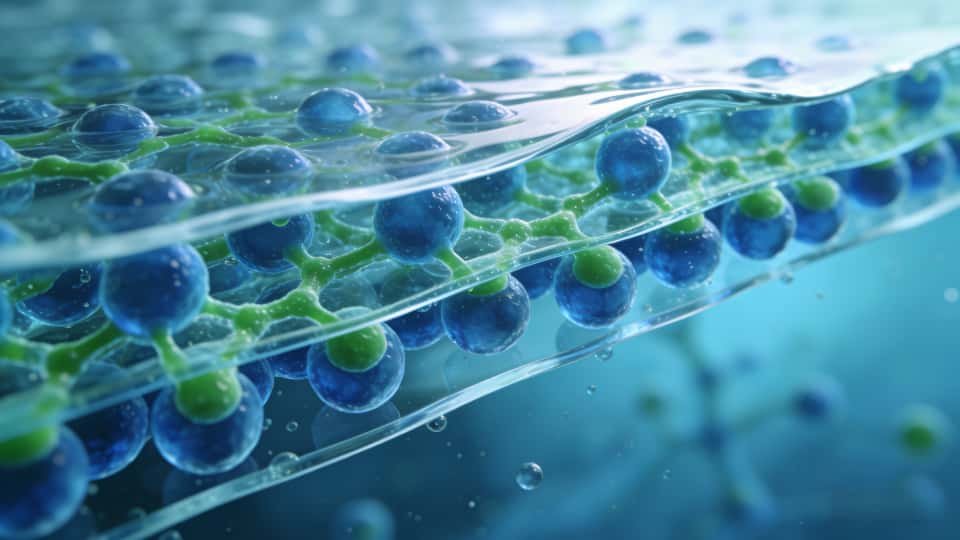
A typical fluorosurfactant has:
- A fluorinated hydrophobic tail (perfluoroalkyl or partially fluorinated chain)
- A hydrophilic head group (anionic, cationic, nonionic, or amphoteric)
This unique construction enables them to orient strongly at liquid interfaces and dramatically reduce surface tension.
Comparison of Surfactant Types and Surface Tension Performance
| Surfactant Type | Typical Working Concentration | Achievable Surface Tension (mN/m) | Chemical Resistance | Cost Level | Key Benefit |
|---|---|---|---|---|---|
| Hydrocarbon surfactant | 0.1–1.0% | 28–35 | Low | Low | Basic wetting |
| Silicone surfactant | 0.05–0.5% | 22–25 | Medium | Medium | Good wetting, leveling |
| Fluorosurfactant | 0.005–0.05% | 15–20 (even lower possible) | Very high | High | Best-in-class wetting + oil repellency |
Fluorosurfactants achieve the same performance at a dosage roughly 10× lower than silicone surfactants.
Performance Advantages of Fluorosurfactants (Explained in Depth)
Achieving technical clarity requires showing how fluorosurfactants behave differently at molecular and application levels.
2. Ultra-Low Surface Tension Reduction
Surface tension determines how well a liquid spreads across a substrate. The lower the surface tension, the better the coating or adhesive can wet surfaces.
Fluorosurfactants can reach 15–17 mN/m, which traditional surfactants simply cannot achieve. This is critical for:
- High-speed automotive coatings
- Industrial metal coatings
- Low-energy plastic substrates (PE, PP, PTFE)
- UV inks and water-based gravure inks
- Electronic coating processes (photoresists, OLED, PCB fabrication)
3. Superior Wetting on Difficult Substrates
Fluorosurfactants enable wetting on substrates that repel most liquids:
- Polypropylene
- Polyethylene
- Fluoropolymers
- Silicone-treated surfaces
- Oil-contaminated metal
Their extremely low surface energy ensures complete substrate coverage.
4. Foam Control and Stability Enhancement
Depending on the structure, fluorosurfactants can either:
- Stabilize foam (fire-fighting foams, AFFF), or
- Suppress foam (industrial cleaners, coatings)
This tunability is unmatched by hydrocarbon systems.
5. Chemical, Thermal, and Oxidation Resistance
C–F bonds resist:
- Acids
- Alkalis
- Oxidizers
- Heat
- Solvents
This is why fluorosurfactants survive the harsh curing and drying processes in factories.
Technical Classification of Fluorosurfactants
To help R&D chemists and formulators, we classify fluorosurfactants by head group type.
Table: Types of Fluorosurfactants and Their Applications
| Surfactant Type | Charge | Example Application | Strengths | Considerations |
|---|---|---|---|---|
| Anionic fluorosurfactants | Negative | Coatings, inks, detergents | High wetting, good compatibility | Not ideal for cationic systems |
| Cationic fluorosurfactants | Positive | Textile treatment, antimicrobial | Strong substrate adsorption | Limited stability in alkaline media |
| Nonionic fluorosurfactants | Neutral | Paints, adhesives, polymer emulsions | Widest pH compatibility | Slightly lower wetting than anionic |
| Amphoteric fluorosurfactants | Switchable charge | Specialized cleaning, foams | Highly flexible performance | Costly |
Deep Technical Guide: How Fluorosurfactants Function in Real-World Applications
Industrial Coatings and Paints: Eliminating Fish-Eyes, Craters, and Poor Leveling
In industrial coatings—whether automotive OEM, powder-in-water, UV-curable, or can coatings—surface defects represent one of the most expensive and disruptive quality issues in manufacturing. Fish-eyes, crawling, and pinholes generally arise because a liquid coating cannot uniformly wet the substrate. When a substrate has contaminants such as oils, fingerprints, mold-release agents, or residual silicone, even small local differences in surface energy can prevent uniform spreading. Hydrocarbon surfactants can reduce surface tension, but only to intermediate ranges (~30 mN/m), which still exceeds the surface energy of plastics and many coated metals. Fluorosurfactants, by contrast, provide surface tension values below 20 mN/m, enabling complete wetting and drastically reducing defects.
A further benefit is their ability to work at extremely low concentrations—often as low as 0.005% to 0.03% by weight. This minimizes impact on coating rheology, gloss, adhesion, and curing behavior. In waterborne coatings, where wetting challenges are even greater, fluorosurfactants act as both dynamic and equilibrium surface tension reducers, meaning they respond rapidly during high-speed spraying or roll-coating operations. Their presence ensures uniform film formation even under turbulent flow conditions.
The result: improved leveling, fewer rejects, greater consistency, and lower production cost. In high-value industries such as automotive, aerospace, and marine coatings, these improvements translate into millions of dollars in savings annually. This is why fluorosurfactants are now standard in next-generation waterborne and low-VOC coating systems.
Inks and Printing: High-Speed Wetting and Anti-Misting Performance
Inkjet, gravure, flexographic, and lithographic printing processes rely heavily on controlled wetting behavior. When operating at high printing speeds, conventional surfactants fail to reduce surface tension rapidly enough to ensure uniform drop formation and prevent misting. Fluorosurfactants provide instantaneous surface tension reduction, ensuring clean edges, controlled dot gain, and consistent color density. They also help prevent air entrainment during recirculation—an issue that leads to nozzle clogging in inkjet systems. In UV-curable inks, compatibility is crucial; fluorosurfactants maintain stability even under intense UV radiation and thermal curing.
Adhesives and Sealants: Enhancing Substrate Wetting Without Weakening Bond Strength
Many adhesives fail not because of poor polymer strength but because of insufficient initial wetting. Fluorosurfactants provide the wetting boost necessary for adhesives to contact microtextures on low-energy surfaces including plastics, metals, and composites. Crucially, because they are used in ultra-low dosages, they do not migrate or weaken the adhesive interface. In pressure-sensitive adhesives (PSA), they can also improve coating uniformity during manufacturing.
Fire-Fighting Foams and AFFF Systems
Although environmental regulations have changed the landscape, fluorosurfactants remain essential where ultra-stable foam and fuel repellency are required. They create a film that spreads over hydrocarbon liquids, inhibiting vapor release and suppressing flames. Modern formulations favor short-chain (C6) fluorosurfactants with lower bioaccumulation potential.
Electronics and Semiconductor Manufacturing
Fluorosurfactants enable uniform coating of photoresists, dielectric layers, and specialty formulations used in semiconductor production. Their chemical inertness ensures that they do not interfere with electronic processes, thermal treatments, or micro-patterning.
How to Select the Right Fluorosurfactant (Professional Guide)
Choosing a fluorosurfactant requires analyzing the following criteria:
| Selection Factor | Key Considerations | Why It Matters |
|---|---|---|
| Surface tension target | Final vs dynamic surface tension | Determines wetting speed + coverage |
| System type | Waterborne, solvent, UV, powder-in-water | Influences solubility + compatibility |
| pH & temperature | Acidic, neutral, or alkaline environment | Impacts surfactant stability |
| End-use application | Coating, foam, ink, adhesive | Determines ionic type selection |
| Regulatory requirements | PFAS restrictions (C6 vs C8) | Ensures global compliance |
Environmental and Regulatory Considerations
Fluorosurfactants have historically raised concerns because early versions (e.g., PFOS, PFOA) were persistent and bioaccumulative. Modern formulations have shifted to short-chain (C6 or C4) fluorosurfactants, which exhibit:
- Faster environmental breakdown
- Lower bioaccumulation
- Improved regulatory acceptance (EU, US EPA, China standards)
Research continues toward developing partially fluorinated and non-PFAS alternatives, but none yet match the ultra-low surface tension performance required for high-end industrial coatings.
Conclusion: Why Fluorosurfactants Are Indispensable in Advanced Industrial Formulations
Fluorosurfactants are more than just additives—they are precision tools enabling manufacturers to achieve performance metrics that no other surfactant class can match. Their unmatched ability to reduce surface tension, enhance wetting, stabilize or suppress foam, and withstand extreme chemical and thermal conditions makes them essential in coatings, inks, adhesives, electronics, polymerization, and specialty chemical industries. As regulatory pressures push the industry toward safer and more sustainable short-chain alternatives, fluorosurfactants continue to evolve while maintaining their unparalleled performance advantages.
Ready to Optimize Your Formulation with High-Performance Fluorosurfactants?
At Sparrow-Chemical, we supply advanced fluorosurfactants—including short-chain, environmentally compliant grades—designed for coatings, inks, adhesives, fire-fighting foams, polymer emulsions, and electronic chemical manufacturing. If you need expert guidance, formulation recommendations, or high-purity industrial supply, we are ready to help.
👉 Contact Sparrow-Chemical today: https://sparrow-chemical.com/